




- Medically Reviewed by: Mr Mfazo Hove, Consultant Ophthalmic Surgeon
- Author: Mr Mfazo Hove
- Published: August 3, 2026
- Last Updated: August 6, 2026
In a recent essay I ended on a question: whether patients should really have to leave one healthcare relationship every time their needs change. It was meant as a provocation, and the response prompted an obvious follow-up. If continuity is the future, what would it actually look like? This is my attempt to answer that, not in the abstract, but as a concrete model.
Care Delivered in Fragments
Today, eye care is delivered in fragments. A patient buys glasses from one business, has their eyes tested by another, is referred to a hospital for a suspected problem, sees a surgeon somewhere else entirely, and is then discharged back into a system that rarely talks to itself. Each step generates its own record, its own imaging and its own version of the patient’s history, and almost none of it follows the patient. Tests are repeated because the previous ones cannot be found. Referrals are delayed, lost or duplicated. The patient, who experiences their eyes as one continuous story, is treated as a series of unconnected episodes.
This is not anyone’s fault. It is the predictable result of a system built as separate businesses rather than as a single relationship. And continuity is not merely a matter of convenience. Where patients experience genuine continuity of care, outcomes measurably improve, to the point that continuity of care has been associated with lower mortality.¹ Fragmentation, in other words, has a clinical cost, not just an administrative one.
Technology as Connective Tissue
Technology has always been at the heart of Blue Fin Vision®, and it is the reason this vision is now achievable rather than merely desirable. The tools that were missing a decade ago now exist.
Consider what we already do. We use artificial intelligence to help generate our clinic notes and letters, turning the spoken consultation into an accurate clinical record as it happens. Extend that logic across the whole journey and the shape of the future becomes clear. Imagine a single application that holds everything about a patient’s eyes in one place. Not only the clinical letter from each visit, but a full transcription of the appointment itself, so nothing is lost the moment the patient leaves the room. Every scan we perform, whether OCT, biometry, visual fields or retinal photography, available to the patient instantly rather than filed where only clinicians can see it. Screening appointments booked and reminders sent automatically. Consent forms completed and stored digitally. And, after surgery, the video of their own operation, available to watch whenever they wish.
Artificial intelligence does far more than transcribe. Deep learning systems can now detect diabetic retinopathy, age-related macular degeneration and other sight-threatening disease from retinal images at a level comparable to expert clinicians.² ³ ⁴ That makes intelligent triage possible: technology that flags the scans needing urgent human attention while reassuring the many patients who are healthy. Combined with teleophthalmology, which is now well established, it allows a virtual ophthalmologist review to sit behind a routine screening appointment without requiring the patient to attend a hospital.⁵ Remote monitoring means the relationship no longer depends on the patient physically returning for every single check.
I believe this is also a decisive competitive advantage, and I say that as a patient as much as a surgeon. Given the choice, I would choose the surgeon who could place my operation, my scans and my records on my phone, immediately and permanently, over one who could not. Patients increasingly expect their health to be as accessible as their banking. The organisation that delivers that will earn a level of trust and loyalty that is difficult to achieve through advertising alone.
An Ecosystem, Layer by Layer
Technology is the connective tissue. The model it connects has layers, each serving the patient at a different stage of life.
At the front sits a modern optical business: premium spectacles for those who want them, and contact lenses available both in practice and online, ideally on subscription so that they arrive without the patient having to think about it. This is familiar territory, and deliberately so. It is where most people first meet an eye care provider, often in their teens or twenties, and it is the natural entry point to a lifelong relationship.
At the centre, and this is the part I consider most important, sits an eye health screening membership. Not a one-off sight test, but a subscription: a structured, recurring programme that goes well beyond a typical optometric refraction by incorporating OCT imaging and a virtual ophthalmologist review as standard. For a predictable monthly or annual fee, a patient’s eyes are properly monitored for life, with something closer to the clinical depth of a hospital assessment delivered at the accessibility of a routine check. This is the engine of the entire model. It is what turns an occasional customer into a continuous patient. It is what actually answers the question of whether people come back, because returning is built into the arrangement rather than left to chance. And it is where genuine eye disease is caught early, when it is most treatable. Early detection is not a marginal gain. In glaucoma, structural change detectable on OCT often precedes irreversible visual loss, which is precisely why continuous, imaging-based monitoring matters.⁶

Above that sits the full range of ophthalmology: general medical eye care, refractive surgery, cataract surgery and refractive lens exchange, glaucoma care, oculoplastic and eyelid surgery, and vitreoretinal care for the retina. Because the breadth is complete, the patient almost never has to be referred out of the relationship. Whatever their eyes need, from a change of prescription to complex surgery, it exists under one roof and within one record.
Meeting Patients Where They Already Are
There is a second shift hidden inside the first, and it concerns location. Specialist eye care has traditionally asked the patient to make a deliberate journey to a medical address, usually once they already suspect that something is wrong. That model serves complex, referral-driven care well, and a recognised medical district will always have its place for it. But it reaches only those who already know they need it.
The alternative is to place eye health where people already are. A destination like Westfield, with its two London sites at Stratford and West London, draws millions of people who have no intention of seeing an eye specialist, yet many of whom would benefit from one. Excellent transport, all-day parking, families and constant footfall: everything a prestige address lacks, a great retail destination has in abundance. What it offers is not prestige but scale, and access to people at the very moment eye care has never crossed their mind.
Picture the destination not as a clinic but as three connected floors, where the experience changes as the patient moves upward. The ground floor is retail in feel, welcoming and open: premium eyewear and contact lenses, eye examinations, OCT screening, dry eye assessment, children’s eye care, AI-assisted screening, digital check-in and a coffee lounge. Someone might walk in simply because they need new glasses and leave having discovered an early cataract, or glaucoma they had no idea was there.
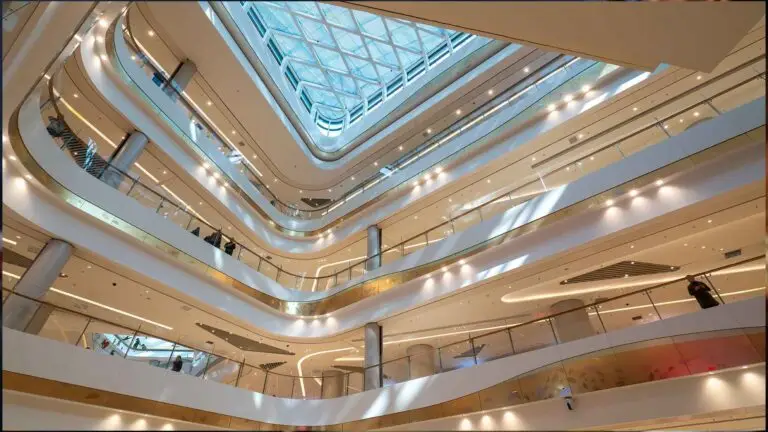
Climb a floor and the atmosphere shifts to something unmistakably medical: consultant clinics for glaucoma, medical retina and oculoplastics, emergency eye care, diagnostic imaging and virtual ophthalmology reporting. A floor higher again, the surgical centre has a character all its own, calm and precise, housing laser vision correction, ICL, lens replacement, cataract and vitreoretinal surgery, with a recovery suite alongside. At no point does the patient leave the ecosystem.
There is something intuitive about this. People already know how to use a great department store, moving between floors according to what they need, and eye care can work in much the same way. Most people do not wake up thinking they need an ophthalmologist; they wake up thinking they need new glasses, or that their eyes do not feel quite right. The ground floor becomes the entry point, technology identifies who is at risk, and the patient is guided upward only when they genuinely need to be. Routine care stays where it belongs, accessible and unintimidating, while specialist attention is reserved for those who truly require it, arriving at the right level and often earlier than it otherwise would. Surgery becomes the final stage of a considered journey rather than its abrupt beginning.
The power of it lives in a single ordinary Saturday. A family arrives to shop, and while they are there one child has a first eye test, a parent orders contact lenses, another has an OCT after noticing some blurring, and a grandparent discusses cataract surgery. Four people, four stages of life, one visit, one organisation, one record. No referral pathway produces that.
The identity of that ground floor matters more than almost any other design decision. It should feel less like a traditional optical chain and more like a technology showroom for the eye: light, space, large imaging displays, interactive education and visible clinical precision. The spectacles matter, but they are not the point. The point is the promise the whole building makes, to be the most advanced destination for lifelong eye health. Framed that way, the retail floor does not diminish the surgical brand above it. It becomes the welcoming front door to it.
I want to be clear about what this means, because it is easily misread. We do not set out to compete with the high-street optician, nor with the specialist ophthalmologist. But by bringing retail and medicine together under one roof, we inevitably become more than either. More than an optician, because behind the spectacles and contact lenses sits the full depth of medical and surgical ophthalmology. More than a traditional ophthalmology practice, because in front of the surgery sits everyday, accessible, all-round eye care. It is that combination, retail and medicine in one continuous relationship, that neither side of the divide currently offers.
The same application ties the physical and the digital together. It is where a patient books an appointment or a screening, orders contact lenses, buys glasses, reads a clinic letter, views an OCT scan with an AI explanation of what it shows, manages their membership and follows their surgical journey through to follow-up. Over time it stops being a records portal and becomes something closer to a person’s eye health companion.
A Fundamentally Stronger Model
Described commercially, this is a stronger model than the one it replaces. It generates recurring revenue rather than depending on one-off transactions, which makes the organisation stable enough to invest in quality for the long term, exactly the lesson the cinema learned from the subscription era. It produces continuity, which improves both the patient experience and, as the evidence shows, clinical outcomes.¹ It creates a single, longitudinal record, and the richer that data becomes, the better the monitoring, the triage and ultimately the outcomes. And it builds lifetime patient relationships rather than isolated encounters. Better continuity, better data and better outcomes are not competing goals here. They reinforce one another.
Building an ecosystem like this is not simply a question of finding the right building. It requires the patient application, electronic patient record, booking platform, imaging devices, payment systems, optical retail software and clinical workflows to function as one integrated operating system. That integration will take time to design, test and refine. But once it exists, it becomes far more than the foundation of a single flagship. It becomes the blueprint from which future locations can be replicated.
One Patient, One Record, One Lifetime
Strip everything back and the vision is simple. One patient. One record. One organisation. Care that lasts a lifetime.
The foundation for this is already laid. Blue Fin Vision® was built on published outcomes and radical transparency, six consecutive years of National Ophthalmology Database data and more than 57,000 procedures, precisely because we believe that to achieve the immeasurable you must first measure everything. Technology now lets us extend that same rigour across the entire patient journey, not only the operating theatre.
This is not another clinic. A clinic is a place you visit when something is wrong. An ecosystem is something you belong to: it looks after you before anything is wrong and stays with you when it is. The future of eye care is not, in my view, a better version of the fragmented system we have inherited. It is the decision to stop fragmenting it at all.
References
- Pereira Gray DJ, Sidaway-Lee K, White E, Thorne A, Evans PH. Continuity of care with doctors: a matter of life and death? A systematic review of continuity of care and mortality. BMJ Open. 2018;8(6):e021161.
- Gulshan V, Peng L, Coram M, Stumpe MC, Wu D, Narayanaswamy A, Venugopalan S, Widner K, Madams T, Cuadros J, Kim R, Raman R, Nelson PC, Mega JL, Webster DR. Development and validation of a deep learning algorithm for detection of diabetic retinopathy in retinal fundus photographs. JAMA. 2016;316(22):2402-2410.
- De Fauw J, Ledsam JR, Romera-Paredes B, Nikolov S, Tomasev N, Blackwell S, Askham H, Glorot X, O’Donoghue B, Visentin D, van den Driessche G, Lakshminarayanan B, Meyer C, Mackinder F, Bouton S, Ayoub K, Chopra R, King D, Karthikesalingam A, Hughes CO, Raine R, Hughes J, Sim DA, Egan CA, Tufail A, Montgomery H, Hassabis D, Rees G, Back T, Khaw PT, Suleyman M, Cornebise J, Keane PA, Ronneberger O. Clinically applicable deep learning for diagnosis and referral in retinal disease. Nature Medicine. 2018;24(9):1342-1350.
- Ting DSW, Cheung CY, Lim G, Tan GSW, Quang ND, Gan A, Hamzah H, Garcia-Franco R, San Yeo IY, Lee SY, Wong EYM, Sabanayagam C, Baskaran M, Ibrahim F, Tan NC, Finkelstein EA, Lamoureux EL, Wong IY, Bressler NM, Sivaprasad S, Varma R, Jonas JB, He MG, Cheng CY, Cheung GCM, Aung T, Hsu W, Lee ML, Wong TY. Development and validation of a deep learning system for diabetic retinopathy and related eye diseases using retinal images from multiethnic populations with diabetes. JAMA. 2017;318(22):2211-2223.
- Rathi S, Tsui E, Mehta N, Zahid S, Schuman JS. The current state of teleophthalmology in the United States. Ophthalmology. 2017;124(12):1729-1734.
- Bussel II, Wollstein G, Schuman JS. OCT for glaucoma diagnosis, screening and detection of glaucoma progression. British Journal of Ophthalmology. 2014;98(Suppl 2):ii15-ii19.
ABOUT THE AUTHOR
Mr Mfazo Hove
Consultant Ophthalmic Surgeon
MBChB MD FRCOphth CertLRS
Mr Mfazo Hove is a Consultant Ophthalmic Surgeon with experience spanning more than 57,000 procedures. He completed 6.5 years of specialist training at Moorfields Eye Hospital and served for five years as a consultant at the Western Eye Hospital, Imperial College Healthcare NHS Trust. He is the founder of Blue Fin Vision®, a consultant-led private ophthalmology practice operating across London, Essex, and Hertfordshire. His clinical expertise encompasses advanced cataract surgery, refractive lens replacement, laser vision correction, and implantable Collamer lenses (ICL).
A ZEISS Key Opinion Leader, Mr Hove is a respected international speaker with five invited engagements across seven cities in 2026:
- ZEISS China tour (Changsha, Shanghai, and Hangzhou, April – ZEISS APAC User Meeting)
- RCOphth Annual Congress – May – Manchester
- ZEISS EMEA User Meeting (Istanbul)
- ZEISS Lausanne User Meeting (Lausanne)
- European Society of Cataract and Refractive Surgeons Annual Congress (ESCRS, London)
Schedule Your Consultation Today
If you would like to make your eye health a continuous relationship rather than an occasional visit, you can book a comprehensive eye health screening with Blue Fin Vision®. You will be seen within a consultant-led UK service at our Harley Street flagship or at any of our clinics across London, Hertfordshire and Essex.


