




- Medically Reviewed by: Mr Mfazo Hove, Consultant Ophthalmic Surgeon
- Author: Mr Mfazo Hove
- Published: April 2, 2026
- Last Updated: May 1, 2026
The Essential Checklist of Questions to Ask Before Your YAG Capsulotomy Consultation
YAG capsulotomy is often described as a simple laser procedure – quick, painless, and routine.
That description is accurate. It is also incomplete.
The laser itself is not the differentiator. The clinical pathway surrounding the laser determines whether the correct diagnosis has been made, whether complications are avoided, and whether vision improves for the right reason.
Read our companion guide: What Is YAG Laser Capsulotomy?
Posterior capsule opacification (PCO) is the most common late complication of cataract surgery, affecting an estimated 20-50% of patients within five years. ¹ YAG capsulotomy restores vision by creating a precise opening in the opacified capsule behind the implanted lens.
The decision to perform it, however, is clinical, not automatic. This checklist is designed to help patients determine whether they need YAG capsulotomy, whether the timing is appropriate, and whether the clinical pathway surrounding it is robust.
How to Use This Checklist
Work through each question before attending for treatment. If any question cannot be answered clearly, raise it at your consultation. A well-structured pathway will have straightforward answers to all of them.
You may wish to:
- Print this checklist and bring it to your appointment
- Save it on your phone to review during your consultation
- Research specific questions in advance using your surgeon’s website or the NOD Audit portal
- Discuss any concerns openly with your surgical team
1. Do You Definitely Have Posterior Capsule Opacification?
Blurred vision after cataract surgery is not automatically PCO. Other causes include:
- Retinal pathology, including macular degeneration, epiretinal membrane, or other retinal disease ²
- Cystoid macular oedema, swelling at the macula, sometimes triggered by the original surgery
- Residual refractive error, where the implanted lens may not have fully corrected your prescription
- Dry eye, a frequently overlooked contributor to post-operative visual disturbance
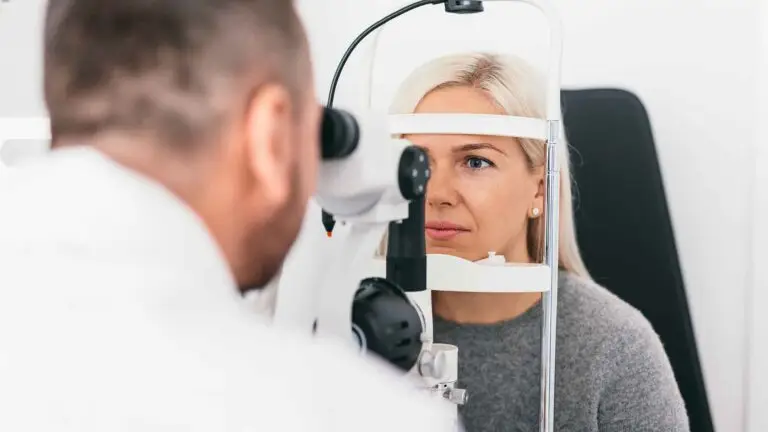
PCO must be confirmed at the slit lamp by a clinician before any laser treatment is offered. A credible pathway begins with a diagnosis, not a booking.
Plain English: Do not assume you need laser because your vision has deteriorated after cataract surgery. The cause must be identified first.
2. Has Retinal Pathology Been Excluded?
PCO can mask underlying retinal disease. When the view to the retina is reduced by capsule opacification, conditions such as macular degeneration, epiretinal membrane, or diabetic maculopathy may go undetected.
Optical coherence tomography (OCT) provides a cross-sectional image of the retina and can identify pathology even when the clinical view is limited. In a thorough pathway, OCT is performed routinely before YAG, not as an optional extra.
If the retinal view is too poor for examination before the laser, a prompt post-operative fundal assessment should be planned and documented as part of the pathway.
Plain English: Missing retinal disease before YAG is a recognised clinical risk. ³ OCT before treatment is a marker of a thorough pathway.

3. Who Is Performing Your YAG Capsulotomy?
The technical requirements of YAG capsulotomy are well within the capability of trained ophthalmologists at various stages of their careers. The laser itself is not the variable.
The clinical judgement surrounding the procedure is.
Decisions about laser energy settings, the size and position of the capsulotomy, and whether to proceed at all given the patient’s clinical picture require experience. In NHS settings, YAG capsulotomy is frequently performed by registrars. In private practice, the procedure is typically consultant-led.
Read more: NHS Waiting Time for YAG Laser Capsulotomy
This is not a criticism of training-grade surgeons – it is a transparency point. Patients are entitled to know who will be performing their treatment.
Cost differences between providers often reflect the clinical pathway, not just the laser. A detailed breakdown of pricing tiers, what each includes, and how to compare providers fairly is discussed in our companion article: What Does YAG Capsulotomy Cost in the UK?
4. Is Co-Existing Ocular Pathology Being Considered?
When PCO is significant, autorefraction becomes unreliable. Visual symptoms may reflect a combination of causes rather than PCO alone. Glaucoma, corneal disease, or dry eye may independently or collectively affect the outcome.
A thorough pre-operative assessment considers the full clinical picture, not only the capsule. Performing YAG without this context risks treating a symptom while missing the underlying cause.

5. Have Floaters After YAG Been Explained?
New floaters are common following YAG capsulotomy. They result from small fragments of the capsule dispersing into the vitreous cavity after the laser creates its opening.
These floaters are:
- Typically temporary, settling over days to several weeks in most cases
- Occasionally persistent, though rarely functionally significant
- Not a sign that the procedure has gone wrong
Clear pre-operative counselling on this point significantly reduces post-operative anxiety. If floaters are not mentioned before the procedure, ask.
Read more: What Are Eye Floaters?
6. Has a Proper Consent Process Been Completed?
YAG capsulotomy carries a low risk profile. It is not a risk-free procedure. Recognised risks include:
- Retinal detachment, rare, with an estimated incidence of 0.1-3.6% depending on patient risk factors ⁴
- Transient rise in intraocular pressure, usually self-limiting
- Lens pitting, if the laser contacts the intraocular lens implant
- Cystoid macular oedema, oedema at the macula, more common in patients with pre-existing risk factors
Consent should be:
- Provided in advance of the procedure, not on the day of treatment
- Accompanied by a written patient information leaflet
- An opportunity for questions, not a formality
Read more: What Are YAG Laser Capsulotomy Side Effects?

7. Will the Retina Be Checked Before and After?
Retinal examination should occur at two points in the pathway:
- Before YAG, to identify any pre-existing retinal pathology and confirm that PCO is the primary cause of visual symptoms
- After YAG, particularly where pre-operative retinal assessment was limited by capsule opacification
A retinal baseline before treatment, and a structured post-operative assessment, are the markers of a pathway designed to detect complications early.
8. What Happens If the Capsulotomy Is Incomplete?
In a minority of cases, residual capsule remains in the visual axis after the initial treatment. This typically occurs when the capsule is particularly thick or when fibrous changes are present.
A second treatment session may be required. In a well-structured pathway, completion of the capsulotomy, including any required repeat treatment, should be included in the initial fee. This should be confirmed in advance.
9. Is There a Clear Plan for Rare Complications?
The small risk of retinal tear or detachment following YAG capsulotomy requires a defined response pathway. Ask:
- Can the treating clinic perform laser retinopexy (treatment for retinal tears) if required?
- Is there access to vitreoretinal surgical support in the event of retinal detachment?
- What is the process if you develop symptoms, such as floaters, flashing lights, or a visual field defect, in the days following treatment?
Retinal detachment after YAG is rare. The existence of a clear management pathway for this eventuality is nonetheless a reasonable expectation in any properly structured service.
Blue Fin Vision®: In-house vitreoretinal support is provided by Professor Mahmut Dogramaci. Laser retinopexy for early post-YAG retinal tears is available within the Blue Fin Vision® pathway.
10. Are Post-Operative Drops Provided?
Topical steroid drops are not universally required after YAG capsulotomy, but they are routinely prescribed in thorough pathways to reduce post-operative inflammation. A typical course involves steroid drops four times daily for one week.
If drops are appropriate for your clinical situation, they should be provided with clear instructions, not an afterthought.

11. Is the Equipment Properly Maintained?
YAG laser platforms from the major manufacturers are broadly comparable in clinical performance. There is no meaningful clinical difference between well-maintained machines from different manufacturers.
The relevant question is not which machine is used, but whether it is regularly serviced and calibrated. This is a standard expectation in any accredited clinical environment, and it is worth confirming that this standard is met.
Final Thoughts
YAG capsulotomy is not defined by the laser.
It is defined by the diagnosis made before it, the clinical judgement applied during it, and the system built around it. The difference between pathways is not the procedure, it is everything surrounding the procedure.
The questions above exist not to create doubt about a safe and effective treatment, but to help patients understand the level of care they should expect, and to identify whether the pathway on offer delivers it.
See what our patients say on our Wall of Love.
Blue Fin Vision® YAG Capsulotomy Checklist
Questions to Ask Before YAG Capsulotomy
Diagnosis and Assessment
- Do you definitely have posterior capsule opacification?
- Has retinal pathology been excluded?
- Is co-existing ocular pathology being considered?
The Clinician and Consent
- Who is performing your YAG capsulotomy?
- Have floaters after YAG been explained?
- Has a proper consent process been completed?
Retinal Safety and Complications
- Will the retina be checked before and after?
- Is there a clear plan for rare complications?
Treatment Completeness and Aftercare
- What happens if the capsulotomy is incomplete?
- Are post-operative drops provided?
- Is the equipment properly maintained?
References
- Schaumberg DA, Dana MR, Christen WG, Glynn RJ. A systematic overview of the incidence of posterior capsule opacification. Ophthalmology. 1998;105(7):1213-1221.
- Henderson BA, Kim JY, Ament CS, Ferrufino-Ponce ZK, Grabowska A, Cremers SL. Clinical pseudophakic cystoid macular edema: risk factors for development and duration after treatment. J Cataract Refract Surg. 2007;33(9):1550-1558.
- Wormstone IM, Wang L, Liu CS. Posterior capsule opacification. Exp Eye Res. 2009;88(2):257-269.
- Javitt JC, Tielsch JM, Canner JK, Kolb MM, Sommer A, Steinberg EP. National outcomes of cataract extraction: increased risk of retinal complications associated with Nd:YAG laser capsulotomy. Ophthalmology. 1992;99(10):1487-1498.
ABOUT THE AUTHOR
Mr Mfazo Hove
Consultant Ophthalmic Surgeon
MBChB MD FRCOphth CertLRS
Mr Mfazo Hove is a Consultant Ophthalmic Surgeon with experience spanning more than 57,000 procedures. He completed 6.5 years of specialist training at Moorfields Eye Hospital and served for five years as a consultant at the Western Eye Hospital, Imperial College Healthcare NHS Trust. He is the founder of Blue Fin Vision®, a consultant-led private ophthalmology practice operating across London, Essex, and Hertfordshire. His clinical expertise encompasses advanced cataract surgery, refractive lens replacement, laser vision correction, and implantable Collamer lenses (ICL).
A ZEISS Key Opinion Leader, Mr Hove is a respected international speaker with five invited engagements across seven cities in 2026:
- ZEISS China tour (Changsha, Shanghai, and Hangzhou, April – ZEISS APAC User Meeting)
- RCOphth Annual Congress – May – Manchester
- ZEISS EMEA User Meeting (Istanbul)
- ZEISS Lausanne User Meeting (Lausanne)
- European Society of Cataract and Refractive Surgeons Annual Congress (ESCRS, London)
Related Topics
Understanding PCO and YAG Capsulotomy
Diagnosis and Assessment
The Procedure
Safety, Risks, and Complications
Recovery, Aftercare, and Follow-Up
Suitability, Cost, and Repeat Treatment
Book Your YAG Capsulotomy Consultation
If you are considering private YAG capsulotomy, Blue Fin Vision® provides consultant-led care across London, Hertfordshire, and Essex. Book a consultation to discuss your treatment options with Mr Hove and his team.


