



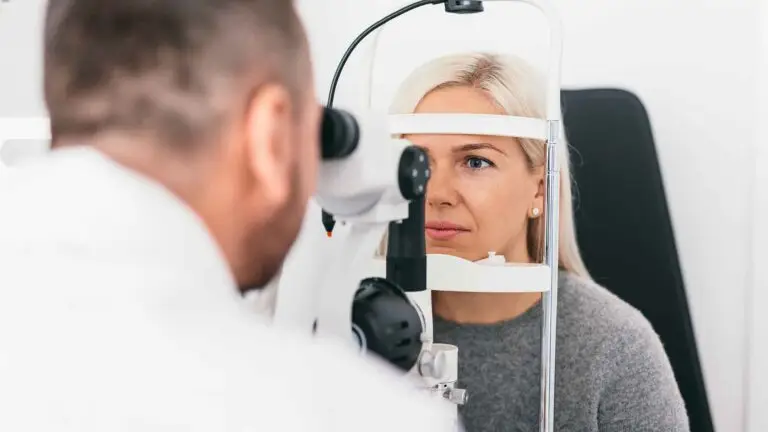
- Medically Reviewed by: Mr Mfazo Hove, Consultant Ophthalmic Surgeon
- Author: Mr Mfazo Hove
- Published: April 25, 2026
- Last Updated: May 1, 2026
Featured commentary, The Times, 2026 - Consultant Ophthalmic Surgeon Advice
The short answer is yes. The longer answer, the clinical reasoning behind that recommendation, reflects how the ocular surface behaves under sustained environmental stress.
As discussed in a recent The Times feature on running and eye health (subscription required), wrap-around sunglasses with UV protection were highlighted as a sensible choice for runners during spring and summer. The article summarised the advice simply: protect the eyes from UV exposure, airflow, and environmental particulates during running.
For broader context on everyday UV protection, read more here.
This blog expands on that advice with the underlying clinical mechanisms, the reasoning that explains why protective eyewear matters even more on long runs than most runners, and many patients, appreciate.
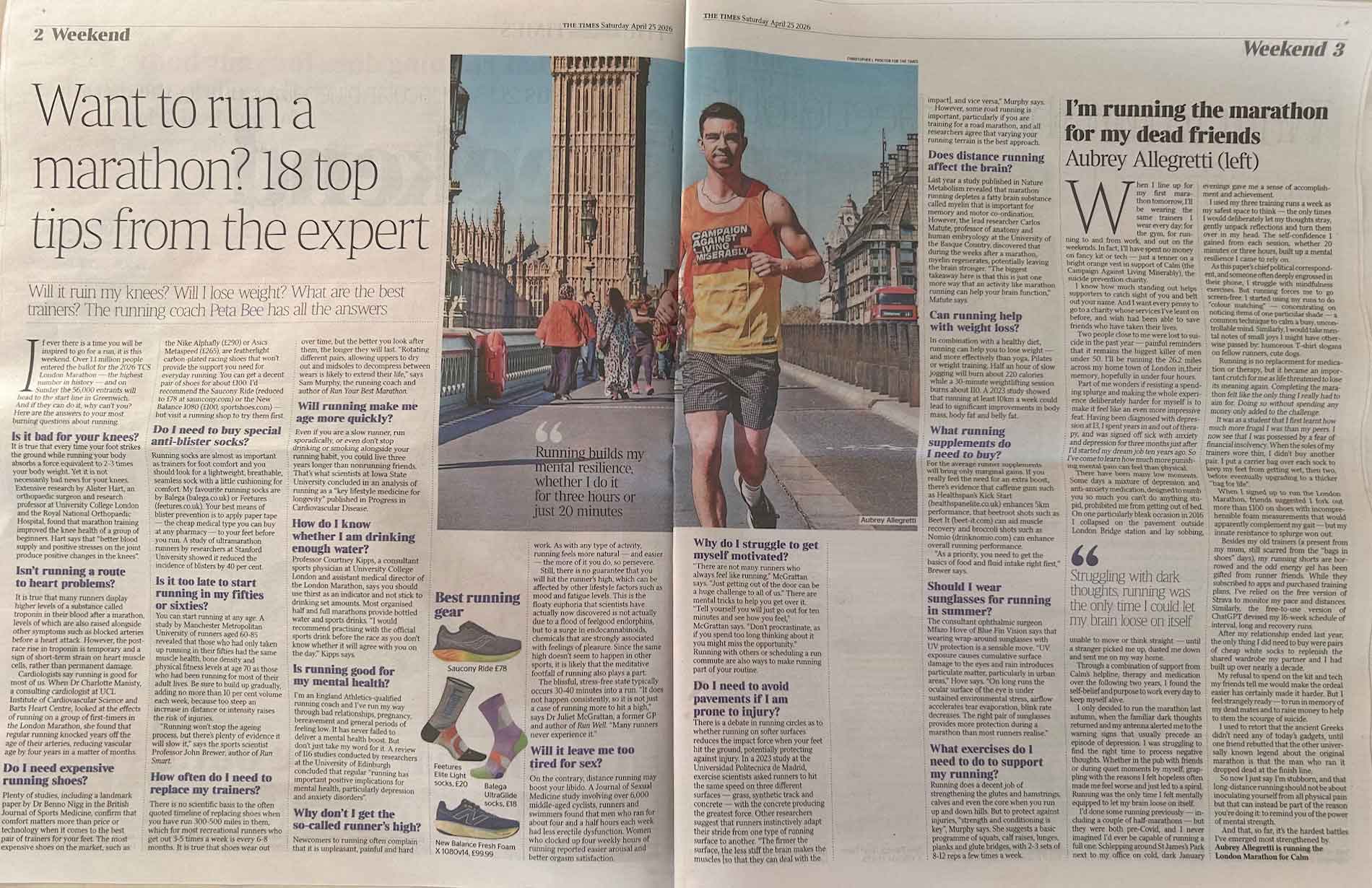
Feature in The Times (Weekend Edition, April 2026) discussing expert guidance on marathon training, including ocular considerations such as tear film stability, UV exposure, and visual performance during endurance running.
UV exposure causes cumulative ocular surface and lenticular damage, while rain and airflow introduce particulate matter, particularly in urban environments. During prolonged running, the ocular surface is subjected to sustained environmental stress: airflow accelerates tear evaporation, blink rate decreases, and the tear film progressively destabilises. Over distance, this is not trivial, it is physiologically measurable.
What actually happens to the eye when you run
When you run, particularly outdoors, the eye is exposed to a combination of mechanical, environmental and physiological stressors.
- Tear film instability
The tear film is a dynamic, trilaminar structure essential for optical quality and ocular surface protection¹. During running:
- Airflow increases tear evaporation²
- Blink rate decreases significantly³
- Incomplete blinking becomes more common
This produces tear film instability and increased osmolarity, a core mechanism in dry eye disease⁴.
- Wind and particulate exposure
Outdoor running exposes the eye to airborne pollutants and particulate matter. These:
- Disrupt epithelial integrity
- Increase inflammatory mediators
- Exacerbate ocular surface disease⁵
Urban pollution in particular is strongly associated with dry eye symptoms and surface damage⁶.
- UV exposure is cumulative
Ultraviolet radiation has well-established ocular effects:
- Photokeratitis (acute exposure)
- Cataract formation
- Pterygium and ocular surface degeneration⁷
UV-related damage is cumulative and dose-dependent over a lifetime⁸.

Why sunglasses function as protective equipment
Proper running sunglasses serve three clinical functions.
Tear film preservation
Wrap-around designs reduce airflow across the ocular surface, slowing evaporation⁹.
Mechanical protection
Sunglasses act as a barrier against wind, dust, and particulates, reducing irritation and inflammatory load on the ocular surface.
UV filtration
High-quality lenses meeting the UV400 standard, which blocks UVA and UVB up to 400nm, reduce cumulative phototoxic damage to the cornea, lens and retina.
A note for post-LASIK, PRK, SMILE and ICL patients
This is the cohort for whom protective eyewear during exercise is least negotiable.
Refractive surgery measurably alters tear film dynamics. After laser eye surgery, corneal nerve density is reduced, blink reflex sensitivity is temporarily blunted, and the ocular surface takes time to recover its pre-operative homeostasis¹⁰. Patients in the early post-operative period who run outdoors without eye protection will experience a measurable worsening of dry eye symptoms, often misattributed to the surgery itself, when the true driver is environmental stress.
At Blue Fin Vision®, all post-refractive patients are advised to wear wrap-around UV-blocking sunglasses for outdoor sport throughout recovery, and to maintain that habit beyond it. The cornea you have invested in protecting deserves the same protection in everyday life.
To see how our post-refractive patients describe their recovery, read more here.
Who else benefits most
Beyond the post-refractive cohort, sunglasses are particularly important for:
- Long-distance and marathon runners
- Urban runners exposed to traffic-generated particulates
- Patients with established dry eye disease
- Patients with prior pterygium or ocular surface disease
What this means for runners
Running places the ocular surface under sustained environmental stress. Without protection, tear film instability increases, symptoms worsen, and UV exposure accumulates over a lifetime.
Clinical Takeaway
For a runner, the right pair of sunglasses is not eyewear. It is ocular surface protection, and over time, that distinction matters.
References
- Craig JP, Nichols KK, Akpek EK, Caffery B, Dua HS, Joo CK, Liu Z, Nelson JD, Nichols JJ, Tsubota K, Stapleton F. TFOS DEWS II Definition and Classification Report. Ocul Surf. 2017;15(3):276–283.
- Wolkoff P. External eye symptoms in indoor environments. Indoor Air. 2017;27(2):246–260.
- Tsubota K, Nakamori K. Dry eyes and video display terminals. N Engl J Med. 1993;328(8):584.
- Bron AJ, de Paiva CS, Chauhan SK, et al. TFOS DEWS II Pathophysiology Report. Ocul Surf. 2017;15(3):438–510.
- Novaes P, Saldiva PHN, Kara-José N, Macchione M, Matsuda M, Racca L, Berra A. Ambient levels of air pollution induce goblet-cell hyperplasia in human conjunctival epithelium. Environ Health Perspect. 2007;115(12):1753–1756.
- Torricelli AAM, Novaes P, Matsuda M, Alves MR. Ocular surface adverse effects of ambient levels of air pollution. Arq Bras Oftalmol. 2011;74(5):377–381.
- Yam JCS, Kwok AKH. Ultraviolet light and ocular diseases. Int Ophthalmol. 2014;34(2):383–400.
- Lucas RM, Yazar S, Young AR, et al. Human health in relation to exposure to solar ultraviolet radiation. Int J Environ Res Public Health. 2014;11(1):683–706.
- Abusharha AA, Pearce EI. The effect of low humidity on the human tear film. Cornea. 2013;32(4):429–434.
- Toda I. Dry eye after LASIK. Invest Ophthalmol Vis Sci. 2018;59(14):DES109–DES115.
ABOUT THE AUTHOR
Mr Mfazo Hove
Consultant Ophthalmic Surgeon
MBChB MD FRCOphth CertLRS
Mr Mfazo Hove is a Consultant Ophthalmic Surgeon with experience spanning more than 57,000 procedures. He completed 6.5 years of specialist training at Moorfields Eye Hospital and served for five years as a consultant at the Western Eye Hospital, Imperial College Healthcare NHS Trust. He is the founder of Blue Fin Vision®, a consultant-led private ophthalmology practice operating across London, Essex, and Hertfordshire. His clinical expertise encompasses advanced cataract surgery, refractive lens replacement, laser vision correction, and implantable Collamer lenses (ICL).
A ZEISS Key Opinion Leader, Mr Hove is a respected international speaker with five invited engagements across seven cities in 2026:
- ZEISS China tour (Changsha, Shanghai, and Hangzhou, April – ZEISS APAC User Meeting)
- RCOphth Annual Congress – May – Manchester
- ZEISS EMEA User Meeting (Istanbul)
- ZEISS Lausanne User Meeting (Lausanne)
- European Society of Cataract and Refractive Surgeons Annual Congress (ESCRS, London)
Related Topics
Dry Eye and the Tear Film
Wind, Air and the Ocular Surface
Post-Laser Recovery and Exercise
Schedule Your Consultation Today
If you are considering laser vision correction or are already in recovery and want tailored advice on protecting your eyes during running, book a consultation with the Blue Fin Vision® team. Our consultant-led clinics on Harley Street and Weymouth Street in London, and at Chelmsford, Hatfield, and Chase Lodge Hospital in North West London, offer the same documented standards of care across every location.

