- Medically Reviewed by: Mr Mfazo Hove, Consultant Ophthalmic Surgeon
- Author: Mr Mfazo Hove
- Published: June 19, 2025
- Last Updated: August 20, 2026
TL;DR: Where Each Stage of ICL Care Actually Happens
ICL care is not one visit, so “where” has seven answers, one per stage of the journey. This page maps them practically across the Blue Fin Vision® network in London and the Home Counties, with what happens at each stage, why it matters, and what you should do, without pretending every location does every stage. For why the choice of provider matters more than the postcode, see Best Place to Get ICL Surgery in London?
Stage 1: Where Can I Have an Initial ICL Assessment at a Private Eye Clinic?
Choosing a private eye clinic in London starts with understanding what the initial assessment includes.
What Happens: A consultant-led consultation covering your refractive history and its stability, an examination of your cornea, natural lens, retina and ocular surface, and the honest comparison across ICL, laser and lens replacement.
Why It Matters: This is where the recommendation is earned, and a credible ICL assessment must be capable of ending with a recommendation not to proceed.
What to Bring: Your current prescription and, ideally, older ones, since stability is part of the test; contact lens wearers are advised at booking how long to leave lenses out before measurement.
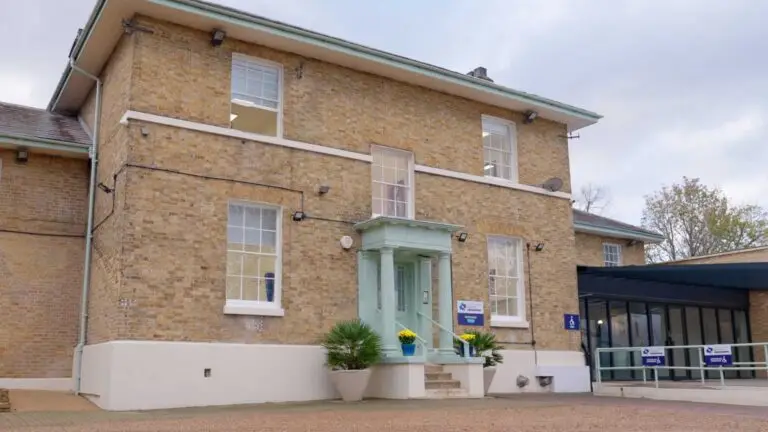
Where: Across the network, at the Harley Street Eye Centre, Weymouth Street Hospital, Chase Lodge Hospital in Mill Hill, One Hatfield Hospital in Hertfordshire and Phoenix Hospital Chelmsford in Essex.

Stage 2: Where Are the Specialist Measurements Performed?
What Happens: Anterior segment measurement of the internal anatomy the lens will occupy, from which the ICL size is reasoned and a postoperative vault predicted, plus a baseline endothelial cell count.
Why It Matters: Sizing and the resulting vault are among the most important technical considerations in the entire procedure, and the endothelium has very limited regenerative capacity in vivo, so year-ten monitoring needs a year-zero number. ¹
What Happens Next: Your consultant explains the measurements, the recommended lens, and the predicted vault, and the lens is ordered to your specification.
Where: Within the network as part of your assessment pathway, with the site confirmed when your assessment is booked.

Stage 3: Where Does ICL Surgery Actually Happen?
What Happens: During implantable collamer lens surgery, a relatively brief day-case procedure is performed under anaesthetic drops in a surgical theatre; the folded lens is introduced through a small corneal opening, unfolds, and is positioned behind the iris in front of your natural lens.
Why It Matters: Theatre standards, governance and the identity of the operating surgeon are place-level facts you should confirm in advance.
Who Operates: The consultant who assessed you remains responsible for the plan, the surgery and the aftercare, wherever each visit happens.
Where: The operating site for your case is confirmed at consultation from our surgical centres across London and the Home Counties.
Stage 4: Where Is My First Postoperative Review?
What Happens: Your measured vault is checked against the predicted one, intraocular pressure is measured, and visual recovery confirmed; most patients notice substantial improvement quickly, with vision refining over the early weeks.
Why It Matters: The prediction-versus-measurement check is the first proof that the sizing judgement was right, and the early period is when the rare early problems declare themselves.
Where: Early postoperative reviews are arranged within the Blue Fin Vision® network, with the available site for your reviews confirmed when your surgery is booked.

Stage 5: Where Can Long-Term Vault and Endothelial Monitoring Happen?
What Happens: Structured lifelong monitoring at defined intervals under the ICL Lifetime Monitoring Protocol™: vault, because long-term follow-up shows it can change gradually over the years; ³ endothelial cell density against your recorded baseline; pressure; and the state of your natural lens.
Why It Matters: This is the stage that recurs for decades, and the one the network exists for, so the visits that repeat are the ones closest to home, with every measurement recorded against your baselines in one system.
Where: Deliverable across the network.
Stage 6: What If I Need an ICL Exchange?
What Happens: Rarely, an ICL needs repositioning, exchange or removal; in a recent high-volume series of 961 EVO ICL eyes the size-related exchange or explant rate was 1.1%, with toric rotation accounting for six exchanges and five eyes exchanged because of initial vault concerns. ²
Why It Matters: The rare patient who needs this pathway should not discover it does not exist.
Where: Within Blue Fin Vision®’s own surgical pathway, at our surgical centres, under the same consultant relationship, not by onward referral.
If an urgent concern ever arises, contact the practice directly; urgent review can be arranged through the Blue Fin Vision® clinical pathway according to clinical need.
Stage 7: What If I Later Need Cataract Surgery?
What Happens: If your natural lens develops a cataract in later life, the ICL is removed as part of the transition to cataract surgery and an intraocular lens, planned within the same system that implanted and monitored it, a written commitment set out in the Blue Fin Vision® Advantage.
Why It Matters: This is the far end of the lifecycle, and a provider should have thought about it before implanting the lens today.
Where: The geography answer at stage seven is the same as at stage five: the system travels with you across the network, and your records travel with the system.
The system behind all of this is published: the Blue Fin Vision® Advantage, the Enhancement Policy, the ICL Surgery Checklist to test any provider against, including us, and transparent pricing on the ICL costs page.
Book Now
Book a paid consultation with the consultant-led team at Blue Fin Vision® to discuss your options at the location most convenient for you. Appointments are available across London, Hertfordshire and Essex.
References
- Packer M. The Implantable Collamer Lens with a central port design: review of the literature. Clin Ophthalmol. 2018;12:2427-2438. PMID: 30568421.
- Hirabayashi M, Virdi G, Nasser T, Libfraind L, Zapata EA, Abramson AJ, Parkhurst G. ICL exchanges or explants due to sizing in a United States high volume center. Clin Ophthalmol. 2025;19:2609-2614. doi:10.2147/OPTH.S528280. PMID: 40800717.
- Alfonso-Bartolozzi B, Fernández-Vega-Cueto L, Lisa C, Palacios A, Madrid-Costa D, Alfonso JF. Ten-year follow-up of posterior chamber phakic intraocular lens with central port design in patients with low and normal vault. J Cataract Refract Surg. 2024;50(5):441-447. doi:10.1097/j.jcrs.0000000000001379. PMID: 38085219.
ABOUT THE AUTHOR
Mr Mfazo Hove
Consultant Ophthalmic Surgeon
MBChB MD FRCOphth CertLRS
Mr Mfazo Hove is a Consultant Ophthalmic Surgeon with experience spanning more than 57,000 procedures. He completed 6.5 years of specialist training at Moorfields Eye Hospital and served for five years as a consultant at the Western Eye Hospital, Imperial College Healthcare NHS Trust. He is the founder of Blue Fin Vision®, a consultant-led private ophthalmology practice operating across London, Essex, and Hertfordshire. His clinical expertise encompasses advanced cataract surgery, refractive lens replacement, laser vision correction, and implantable Collamer lenses (ICL).
A ZEISS Key Opinion Leader, Mr Hove is a respected international speaker with five invited engagements across seven cities in 2026:
- ZEISS China tour (Changsha, Shanghai, and Hangzhou, April – ZEISS APAC User Meeting)
- RCOphth Annual Congress – May – Manchester
- ZEISS EMEA User Meeting (Istanbul)
- ZEISS Lausanne User Meeting (Lausanne)
- European Society of Cataract and Refractive Surgeons Annual Congress (ESCRS, London)