


Chalazion Removal FAQs
Blue Fin Vision® consultants answer common questions about chalazion removal. From understanding eyelid cysts to treatment options, recovery and costs, find practical guidance to help you decide whether treatment is right for you.
What is a chalazion?
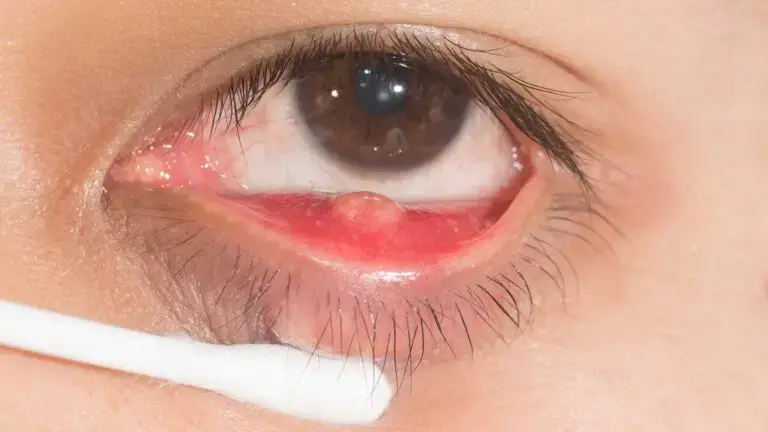
A chalazion, also called a meibomian cyst, is a firm lump in the eyelid caused by a blocked oil gland. Trapped oil triggers a slow inflammatory reaction, which forms the lump.
It is not an infection, and many chalazia settle with time and warm compresses. Those that persist can be treated with a short procedure under local anaesthetic.
Is a chalazion the same as a stye?
No. A stye is a painful, red infection at the eyelid margin that usually settles within a week or two. A chalazion is usually painless, develops more slowly and can last for months.
A stye can leave a chalazion behind once the infection clears.
Can a chalazion affect my vision or eye comfort?
Small chalazia often cause no symptoms beyond their appearance. Larger ones can press on the eye and blur or distort vision. They may also rub against the eye or make the eyelid feel heavy.
Your consultant will assess the lump and explain whether removal is appropriate.
Will my chalazion go away on its own?
It may. Warm compresses and gentle lid massage are the right first steps.
These measures are less effective for older chalazia. In one randomised trial, lumps present for more than two months were less likely to resolve without a procedure.¹ If yours has not settled after four to six weeks of regular compresses, an assessment is worthwhile.
What treatment options are available for chalazion removal?
The options are warm compresses and lid hygiene, or incision and curettage under local anaesthetic. Incision and curettage involves making a small incision and removing the chalazion’s contents.
In one randomised study, incision and curettage cleared 87% of chalazia at three weeks, compared with 46% for hot compresses.² Your consultant will explain whether treatment is appropriate or whether waiting is still reasonable.
Is chalazion removal painful?
The local anaesthetic injection stings for a few seconds. After that, most people feel pressure but no pain.
There may be a dull ache for a day afterwards, which paracetamol usually controls.
How long does chalazion removal take?
The procedure itself usually takes around 20 minutes. Allow extra time for your consultation and preparation.
You return home the same day. Where appropriate, treatment can take place at the same visit as your consultation.
What aftercare will I need?
Apply chloramphenicol eye ointment to the treated eye twice daily for five days. Most people return to work after one or two days, although bruising can take one to two weeks to fade.
No routine follow-up appointment is needed or included. Contact our team if you have concerns during recovery.
Can I drive home after chalazion removal?
Please arrange for someone to take you home or use a taxi or public transport. You must not drive while the eye is padded or your vision is affected.
Most people can drive the next day once the pad is off and their vision is comfortable.
What are the risks of chalazion removal?
Chalazion removal is a low-risk procedure, but no procedure is risk-free. Bruising, swelling, mild discomfort and blood-tinged tears can occur during early recovery.
Uncommon complications include bleeding, infection and granulation tissue, a small, harmless healing bump inside the eyelid. Rare but serious risks include injury to the eye, changes to the eyelid’s shape and damage to nearby tear drainage channels.
Your consultant explains these risks before you decide whether to proceed.
Will I have a scar?
Usually not. The incision is normally made on the inner surface of the eyelid, so there is generally no visible scar.
Occasionally, a chalazion close to the skin is better treated from the outside. Your consultant will explain this beforehand.
Will the chalazion come back?
Up to one in ten chalazia need a second procedure because the first has not fully cleared the lump.
For self-funding patients, this is carried out at no additional charge at any of our locations under the Blue Fin Vision® Advantage, up to a limit of two procedures from one fee. Insured patients claim through their insurer, subject to their policy.
New chalazia can also develop in other glands. Managing blepharitis, inflammation around the eyelid margins, or rosacea, a skin condition that can affect the eyelids, and maintaining lid hygiene helps lower that risk.
Could my eyelid lump be something more serious?
Occasionally, a lump that looks like a chalazion is something else. Warning signs include eyelash loss, ulceration or bleeding, thickening of the eyelid margin, and a lump that returns in the same place.
A lump with these features is not managed as a routine chalazion and needs prompt assessment.
Do you treat children?
We treat patients aged 16 and over under local anaesthetic. Our chalazion service does not treat younger children and does not include general anaesthetic.
Most chalazia in children settle with warm compresses and lid hygiene. If a child’s chalazion is large or persistent, their GP or optometrist can advise on referral to a paediatric eye service.
Can chalazion removal be done on the NHS?
Sometimes, under narrow funding criteria. Examples include a chalazion present for more than six months despite at least four weeks of conservative treatment, one that significantly affects vision, or one causing recurrent infection or an abscess.³
The full criteria are set out in NHS England’s Evidence-Based Interventions guidance. Access and waiting times vary by area.
Am I suitable for chalazion removal?
Most people aged 16 and over with a chalazion that has not settled are suitable for removal.
Your consultant will confirm the diagnosis, explain whether further warm compresses are worthwhile and recommend the appropriate approach for you.
References
- Wu AY, Gervasio KA, Gergoudis KN, Wei C, Oestreicher JH, Harvey JT. Conservative therapy for chalazia: is it really effective? Acta Ophthalmol. 2018;96(4):e503-9.
- Goawalla A, Lee V. A prospective randomized treatment study comparing three treatment options for chalazia: triamcinolone acetonide injections, incision and curettage and treatment with hot compresses. Clin Exp Ophthalmol. 2007;35(8):706-12.
- NHS England. Evidence-Based Interventions: guidance for CCGs. London: NHS England; 2019.