What the World Cup and a Packed Cinema Taught Me About the Future of Eye Care
- Posted
- Medically Reviewed by: Mr Mfazo Hove, Consultant Ophthalmic Surgeon
- Author: Mr Mfazo Hove
- Published: July 27, 2026
- Last Updated: August 6, 2026
Today feels like one of those rare days when millions of people share the same experience.
The FIFA World Cup final will bring together fans from every corner of the globe. The expanded tournament has, in many ways, made the competition feel more like a true World Cup than ever before: more nations, more stories, more supporters, and more communities united around a single event. This time it also feels more personal. Having been in the stadium in Boston for a match earlier in the tournament, I felt the noise, the colour and the shared anticipation first hand, and that memory has stayed with me all the way to the final.
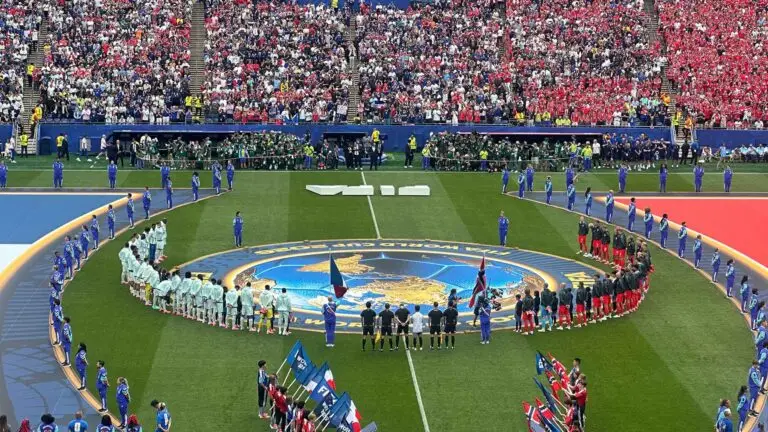
Inside the stadium in Boston, FIFA World Cup 2026. Author’s own photograph.
A Full Cinema and What It Reminded Me
Earlier this week I experienced something I had not seen since before COVID. I went to watch The Odyssey. The cinema was packed, every seat taken. There was a buzz before the lights dimmed, laughter at the right moments, silence during the dramatic scenes, and applause at the end. It reminded me that some experiences simply are not the same when they are consumed alone on a sofa. Streaming has given us incredible convenience, but convenience is not always connection. For a few hours, hundreds of strangers shared the same story, and that felt surprisingly novel, even though not long ago it was simply normal life.

A packed cinema auditorium, every seat taken.
Why Cinemas Turned to Subscriptions
The cinema industry has had a difficult few years. COVID fundamentally changed behaviour, and just as people were beginning to return, streaming platforms accelerated the shift towards watching everything at home. Attendance fell, and cinemas have had to rethink their business model. Many now offer unlimited monthly memberships, borrowing directly from the subscription model that transformed television through Netflix, Disney+ and others. It is an attempt to make going to the cinema part of everyday life again rather than an occasional luxury. Watching people fill the cinema this week made me hope it succeeds, because once experiences disappear, recreating them is incredibly difficult.
Continuity Beats Transactions
The lesson is bigger than subscription pricing. The cinema survives not because people occasionally watch a film, but because it becomes part of their routine, with income arriving steadily and in advance rather than sporadically and only at the moment of consumption. Predictable funding is what keeps the doors open. Successful businesses increasingly build continuity rather than transactions. The aim is not simply to attract a customer once; it is to become part of their lives.
The Uncomfortable Parallel for Healthcare
There is an uncomfortable parallel here for healthcare, and it runs against something deep in the British instinct. In this country we are not used to paying directly for our health. Care is funded through general taxation and is free at the point of use, which means most of us never consciously set money aside for our own future health needs. We pay in advance for a phone, a gym membership, a streaming service and, increasingly, the cinema, yet we do not think the same way about our eyes, our hearts or our joints. The logic that keeps the cinema alive, paying steadily before you need the service rather than scrambling at the point of crisis, may be exactly the logic that healthcare will come to need. Funding your health even before you need it is a genuinely new idea here, and an uncomfortable one, but it may be where we are heading.
Why More Funding Alone Does Not Fix It
I do not raise this lightly, because how we fund the NHS is one of the most contentious subjects in British public life, and the service is rightly cherished. Yet it is hard to escape the feeling that it has become a system where more money does not reliably translate into better care. Each additional injection of funding seems to be absorbed almost as quickly as it arrives: by an ageing population that needs more care for longer, by new treatments that are remarkable but extraordinarily expensive, and by structural pressures that no single budget can resolve. At times it can feel like a bottomless pit, where investment goes in and proportionate improvement does not reliably come out. This is not an argument against funding the NHS, and reasonable people disagree sharply about all of it. It is simply an observation that funding alone, arriving only once illness has already taken hold, may not be the model that serves us best for the decades ahead.
How Primary Eye Care Is Funded in the UK
If that is right, part of the answer may lie in changing when and how we invest in our own health: shifting from paying reactively, at the point of crisis, towards funding continuity and prevention before problems arise. That is a significant cultural shift. But it is precisely the shift the cinema is asking of its audience, and eye care is a natural place to begin.
Primary eye care in the UK is delivered largely through community optometry, and the funding model is the key to everything that follows. State-funded sight testing is only partial: NHS sight tests are available to specific groups, including people aged 60 and over, children, and those with diabetes or a family history of glaucoma, and they are provided universally in Scotland, but there is no comprehensive government funding for routine eye examinations across the whole population. Most optical practices therefore rely on selling glasses, contact lenses and related products to sustain their businesses.
Where the Incentives Diverge
That funding structure, not the people working within it, shapes the ecosystem. Independent optometrists remain an essential part of eye care and many provide outstanding clinical care. But the way primary eye care is funded creates an incentive that does not always sit naturally alongside what we do at Blue Fin Vision®. Premium cataract surgery, refractive lens exchange and laser vision correction are all designed to reduce dependence on glasses and contact lenses.¹ ² From a patient’s perspective, that is often exactly the outcome they are hoping for. From the perspective of a practice that depends on optical sales, it is a more complicated proposition. Our interests are not always naturally aligned, and that misalignment is a product of how the system is funded rather than any failing on the part of individual optometrists.
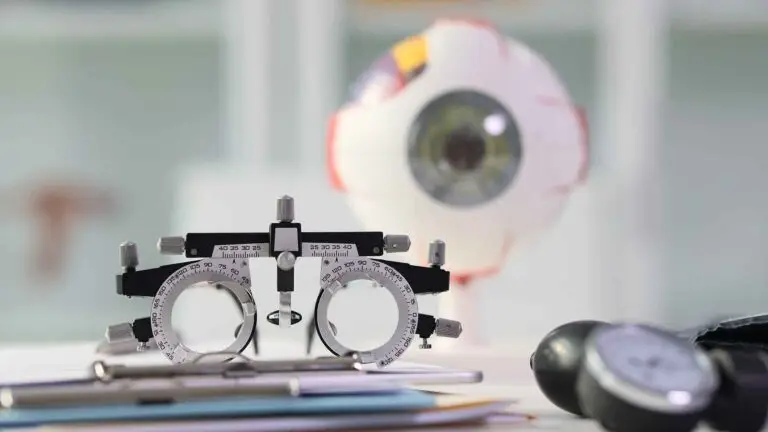
Surgery Does Not End the Need for Monitoring
We encourage every patient to continue having regular eye examinations, typically every two years or more frequently where appropriate, because surgery corrects vision; it does not remove the need for lifelong eye health monitoring. Glaucoma, age-related macular degeneration, diabetic eye disease and many retinal conditions still require ongoing surveillance regardless of whether someone wears glasses.³ ⁴ ⁵ These conditions are common, sight-threatening and often symptomless in their early stages, which is precisely why continuity of monitoring matters.
The honest question is whether every patient actually returns for that routine care. The honest answer is that I do not know.
Building Return into the Pathway
And this is where the cinema comes back in. The industry’s response to a retention problem was not to demand loyalty; it was to build a model that made returning effortless and continuous. A monthly membership changes the default. Eye care faces a version of the same retention problem, and it may call for a version of the same solution. We already apply this thinking in one part of our practice: our ICL Lifetime Monitoring Protocol™ commits patients to annual vault and endothelial cell count scans for life, so that follow-up is built into the pathway rather than left to chance. The logic extends naturally to eye health more broadly. A structured, ongoing relationship, rather than a series of disconnected one-off visits, is what actually brings people back.
A Refractive Relationship That Spans Decades
That points to a bigger idea. Perhaps the future is not separating surgery from primary eye care but integrating them. Consider what modern refractive surgery already makes possible. We can reduce or remove a patient’s dependence on glasses and contact lenses at almost any stage of adult life: laser eye surgery and ICL implantation for younger adults, refractive lens exchange in middle age, and premium cataract surgery in later years. In practice that is a continuous refractive relationship stretching from around the age of 18 to 95. And if we can look after someone’s vision across that entire span, should we not be looking after their wider eye health for the same length of time?
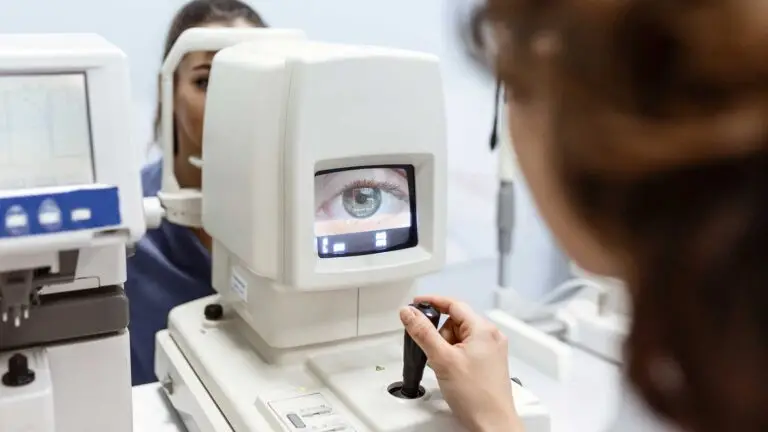
What an Integrated Model Adds
This is not a hypothetical proposition. We already have the diagnostic equipment to deliver every part of this care, from routine sight testing and retinal imaging through to the most complex surgery. What an integrated model adds is structure: optometrists, ophthalmologists and allied eye health professionals working within a single organisation rather than across disconnected ones. Imagine a patient having their first comprehensive eye examination as a young adult, buying their first pair of glasses, moving to contact lenses, later choosing laser vision correction or lens replacement, developing cataracts decades afterwards, and eventually needing glaucoma or retinal care, with their records, imaging and clinical history following them throughout. Today those stages are usually delivered by entirely different providers. Tomorrow they could sit within one continuing relationship, so that patients move through the stages of a single healthcare journey rather than between fragmented services.
Not a Replacement for Community Optometry
This is not about replacing community optometry. It is about asking whether patients increasingly value continuity: one organisation able to care for their eyes whether they need screening, spectacles, laser vision correction or complex surgery. Eye care could work in much the same way. Think of how someone enters an Apple Store once and then remains within that ecosystem as their needs evolve over years. Perhaps eye care should aspire to the same continuity: a place where someone enters once, as a young adult, and stays cared for across the decades as their vision changes. That is a far larger vision than simply selling glasses downstairs. It is a shift from fragmented, transactional eye care towards a single, vertically integrated relationship that lasts a lifetime.
The Question Worth Asking
The World Cup reminded me how powerful shared experiences still are. The cinema reminded me that industries survive by adapting before they have to. Eye care may be approaching a similar moment. The question is not whether patients need surgery, glasses or monitoring. The question is whether they should have to leave one healthcare relationship every time those needs change.
References
- de Silva SR, Evans JR, Kirthi V, Ziaei M, Leyland M. Multifocal versus monofocal intraocular lenses after cataract extraction. Cochrane Database of Systematic Reviews. 2016;12:CD003169.
- Solomon KD, Fernández de Castro LE, Sandoval HP, Biber JM, Groat B, Neff KD, Ying MS, French JW, Donnenfeld ED, Lindstrom RL. LASIK world literature review: quality of life and patient satisfaction. Ophthalmology. 2009;116(4):691-701.
- Tham YC, Li X, Wong TY, Quigley HA, Aung T, Cheng CY. Global prevalence of glaucoma and projections of glaucoma burden through 2040: a systematic review and meta-analysis. Ophthalmology. 2014;121(11):2081-2090.
- Wong WL, Su X, Li X, Cheung CMG, Klein R, Cheng CY, Wong TY. Global prevalence of age-related macular degeneration and disease burden projection for 2020 and 2040: a systematic review and meta-analysis. The Lancet Global Health. 2014;2(2):e106-e116.
- Scanlon PH. The English National Screening Programme for diabetic retinopathy 2003-2016. Acta Diabetologica. 2017;54(6):515-525.
ABOUT THE AUTHOR
Mr Mfazo Hove
Consultant Ophthalmic Surgeon
MBChB MD FRCOphth CertLRS
Mr Mfazo Hove is a Consultant Ophthalmic Surgeon with experience spanning more than 57,000 procedures. He completed 6.5 years of specialist training at Moorfields Eye Hospital and served for five years as a consultant at the Western Eye Hospital, Imperial College Healthcare NHS Trust. He is the founder of Blue Fin Vision®, a consultant-led private ophthalmology practice operating across London, Essex, and Hertfordshire. His clinical expertise encompasses advanced cataract surgery, refractive lens replacement, laser vision correction, and implantable Collamer lenses (ICL).
A ZEISS Key Opinion Leader, Mr Hove is a respected international speaker with five invited engagements across seven cities in 2026:
- ZEISS China tour (Changsha, Shanghai, and Hangzhou, April – ZEISS APAC User Meeting)
- RCOphth Annual Congress – May – Manchester
- ZEISS EMEA User Meeting (Istanbul)
- ZEISS Lausanne User Meeting (Lausanne)
- European Society of Cataract and Refractive Surgeons Annual Congress (ESCRS, London)
Schedule Your Consultation Today
If this resonates, you can make eye health part of your routine and book a comprehensive eye health screening with Blue Fin Vision®. You will be seen within a consultant-led clinic network with documented, independently audited outcomes, serving patients across London, Hertfordshire and Essex. Wherever you are seen, your records, imaging and clinical standards are the same.