



- Medically Reviewed by: Mr Mfazo Hove, Consultant Ophthalmic Surgeon
- Author: Mr Mfazo Hove
- Published: June 2, 2025
- Last Updated: October 20, 2026
TL;DR: Blue Fin Vision® offers surgical pinguecula removal in Chelmsford at Phoenix Hospital Chelmsford, Essex Healthcare Park, West Hanningfield Road, Chelmsford, CM2 8HN. It is the same consultant-led excision, meaning surgical removal, we perform in London, drawing on experience of removing more than 100 pinguecula growths between October 2025 and September 2026. Patients across Essex can therefore have surgery locally without travelling into central London.
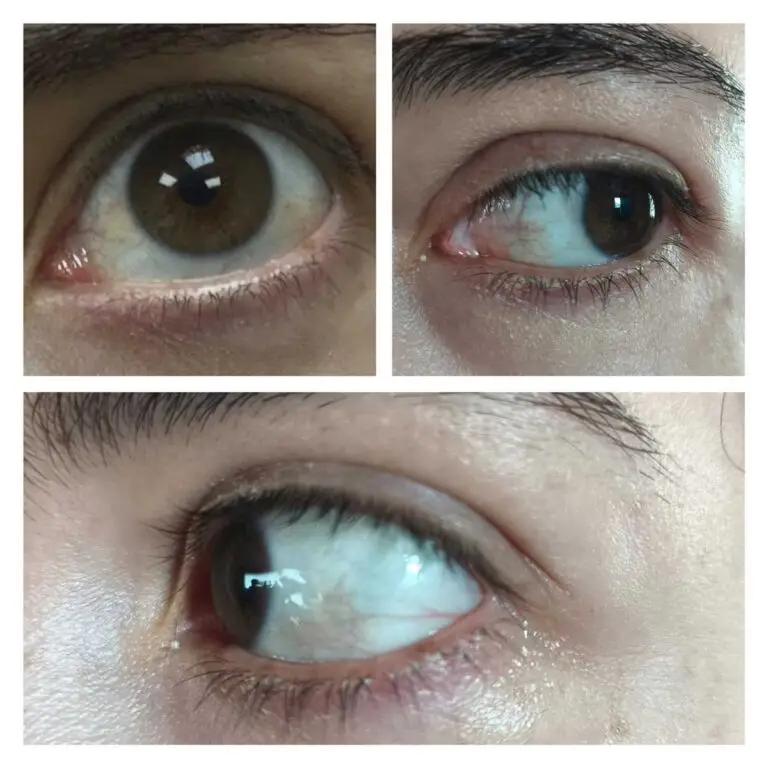
Pinguecula before removal (top left) and the same sites two months after surgical excision.
Is Removal Right for You?
At our eye clinic at Phoenix Hospital Chelmsford, the consultation decides whether removal will actually help.
Pinguecula growths that flare repeatedly are often accompanied by damage to the nearby corneal surface, the clear front surface of the eye, and an unstable tear film, the thin layer of tears covering it.¹
Excision of a raised pinguecula can improve dry eye symptoms.² If your discomfort has another cause, removal alone will not fix it, and we will say so.

Pinguecula Surgery in Chelmsford: What to Expect
How We Perform the Procedure
Excision is performed under lidocaine with adrenaline. Lidocaine is a local anaesthetic that numbs the treatment area, while adrenaline narrows blood vessels to reduce bleeding.
We avoid diathermy, which uses heat to seal blood vessels, because heat damage to the sclera, the tough white outer layer of the eye, could compromise the cosmetic result. We control bleeding with gentle pressure padding instead, using an eye pad to apply light pressure.
Once bleeding has settled, you go home the same day, wearing sunglasses, with no eye covering.
What Results Can You Expect?
The aim is a flatter, whiter surface. Published results of excision are encouraging, with most patients rating their cosmetic result excellent or good at 12 months in one series.³
However, redness takes weeks to fade and some fine blood vessels can remain.
Is Laser Pinguecula Removal Available in Chelmsford?
No. Surgical removal is offered in Chelmsford, while argon laser is available only at our Harley Street clinic.
Argon laser can be used for selected small growths.⁴ For most patients, excision is our preferred treatment.

Recovery
- First few days: grittiness, eased by drops and simple pain relief.
- One to three weeks: redness gradually fades.
- Work: most people return within two to five days.
- Afterwards: wraparound sunglasses help, because sunlight and age are associated with new pinguecula growths forming.⁵
Cost
The cost of removal of pinguecula in Chelmsford depends on how many are treated together. Surgical removal is priced per pinguecula, with reduced prices when more than one is treated together. See our costs page.
Read these supporting resources before your consultation:
- Our pterygium and pinguecula removal page.
- Our suitability page.
- Our risks page.
- Our patient information.
- The Phoenix Hospital Chelmsford page.
Book a consultation with Blue Fin Vision® to discuss whether surgical pinguecula removal in Chelmsford is appropriate for you.
References
- Küçük E, Yilmaz U, Zor KR. Corneal epithelial damage and impaired tear functions in patients with inflamed pinguecula. J Ophthalmol. 2018;2018:2474173. doi:10.1155/2018/2474173.
- Jeong J, Rand GM, Kwon T, Kwon JW. The improvement of dry eye symptoms after pinguecula excision and conjunctival autograft with fibrin glue. J Ophthalmol. 2019;2019:6438157. doi:10.1155/2019/6438157.
- Jung S, Kwon JW, Hwang HS, Chuck RS. Vascular regression after pinguecula excision and conjunctival autograft using fibrin glue. Eye Contact Lens. 2017;43(3):199-202. doi:10.1097/ICL.0000000000000250. PMID:27058827.
- Ahn SJ, Shin KH, Kim MK, Wee WR, Kwon JW. One-year outcome of argon laser photocoagulation of pinguecula. Cornea. 2013;32(7):971-5.
- Le Q, Xiang J, Cui X, Zhou X, Xu J. Prevalence and associated factors of pinguecula in a rural population in Shanghai, Eastern China. Ophthalmic Epidemiol. 2015;22(2):130-8.
ABOUT THE AUTHOR
Mr Mfazo Hove
MBChB MD FRCOphth CertLRS
Consultant Ophthalmic Surgeon | Founder and Medical Director, Blue Fin Vision®
Mr Mfazo Hove is a Consultant Ophthalmic Surgeon with more than two decades of experience across NHS and private practice and more than 57,000 ophthalmic procedures performed. He trained for six and a half years at Moorfields Eye Hospital and served for five years as an NHS consultant at the Western Eye Hospital, Imperial College Healthcare NHS Trust.
He specialises in cataract surgery, refractive lens replacement, laser vision correction and implantable Collamer lenses (ICL). He is the founder and Medical Director of Blue Fin Vision®, a private ophthalmology group providing consultant-delivered care across London, Hertfordshire and Essex. His cataract surgery outcomes are publicly reported through the National Ophthalmology Database.
A ZEISS Key Opinion Leader and international speaker, Mr Hove is a contributing author to The Ophthalmologist. His writing examines how clinical governance and the organisation of ophthalmic services shape patients’ experiences and outcomes, with a focus on transparent outcome reporting, surgical training and long-term accountability for patient care.