- Medically Reviewed by: Mr Mfazo Hove, Consultant Ophthalmic Surgeon
- Author: Chris Dunnington
- Published: October 29, 2025
- Last Updated: May 1, 2026
If you’ve noticed that driving after dark has become more difficult lately, you’re not alone. Many people first realise the true extent of their vision problems when headlights seem unbearably bright, road signs become harder to read, or that familiar route home suddenly feels more challenging. For those living with cataracts, night driving often transforms from a routine activity into a source of genuine anxiety and risk.
Understanding how cataracts affect your ability to drive safely at night is essential, not just for your own wellbeing but for everyone sharing the road with you. This guide explores the specific challenges of night driving with cataracts, offers practical advice for staying safer behind the wheel, and explains why cataract surgery at a top-rated private eye clinic could be the lasting fix you need.
Understanding How Cataracts Affect Night Vision
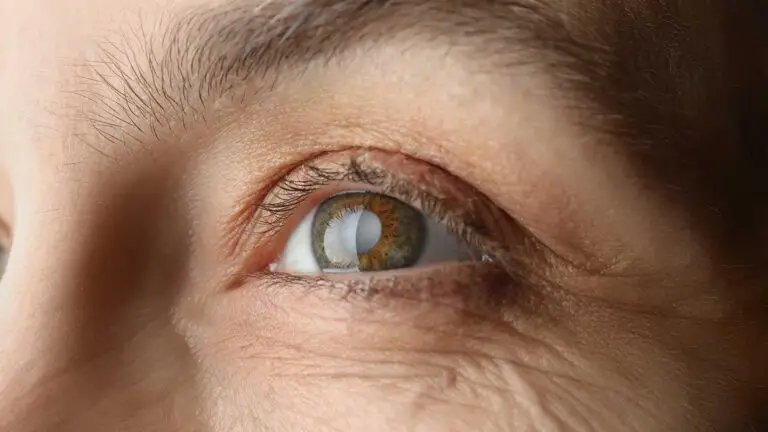
Cataracts develop when the eye’s natural lens gradually becomes cloudy, rather like looking through a frosted window. This clouding occurs as proteins within the lens break down and clump together over time, a process that affects more than half of adults by the age of 80. Whilst cataracts can impair vision in any lighting condition, their effects become dramatically worse after dark.
The clouded lens scatters incoming light rather than allowing it to pass cleanly through to the retina. During daylight hours, you might manage reasonably well despite some blurriness or reduced colour perception. However, once darkness falls, several compounding factors make driving considerably more hazardous.
Your pupils naturally dilate in low light, allowing more light to enter the eye. With cataracts, this increased light passes through more of the imperfect, clouded lens, magnifying visual defects and creating a cascade of problems. Light from oncoming headlights, streetlamps, and reflections from wet road surfaces doesn’t travel in straight lines as it should. Instead, it disperses in multiple directions, creating halos, starbursts, and intense glare that can be both uncomfortable and genuinely blinding.
Beyond the glare, cataracts significantly reduce your contrast sensitivity. This means distinguishing between objects of similar tones becomes much harder. Imagine trying to spot a pedestrian wearing dark clothing against a shadowy pavement or noticing a cyclist without lights on a poorly lit road. These situations, already challenging in dim conditions, become considerably more dangerous when cataracts are involved.
The Dangers of Night Driving with Cataracts
Whilst it might be tempting to simply squint through the discomfort or avoid motorways, the dangers of night driving with cataracts extend far beyond personal inconvenience. The risks are real, measurable, and potentially life threatening.
Delayed reaction times pose perhaps the most serious concern. When your vision is compromised by glare and reduced clarity, the time it takes to recognise and respond to hazards increases.
Misjudging distances becomes a genuine problem when your depth perception suffers. Lane changes, judging the speed of approaching vehicles, and parking all demand accurate spatial awareness. Cataracts disrupt this, making manoeuvres that once felt automatic suddenly uncertain and risky.
Increased accident risk naturally follows from these compounded visual impairments. Research indicates that 85.9% of people with cataracts in both eyes reported difficulty driving at night. The combination of poor night vision, slower reactions, and compromised depth perception creates a perfect storm of danger, raising the likelihood of collisions, falls whilst getting in and out of the car, and other incidents.
The psychological impact shouldn’t be overlooked either. Many drivers with cataracts report growing anxiety about night journeys, avoiding social events or essential trips simply because they don’t feel safe on the roads after dark. This retreat from normal life can lead to isolation and a diminished quality of life, affecting mental wellbeing alongside physical safety.
As the seasons change and evenings grow darker earlier, these challenges intensify. What might have been manageable during long summer days becomes a serious safety issue when the clocks go back. Many patients only truly recognise how much their vision has deteriorated once they’re suddenly navigating familiar routes in darkness, struggling with glare from headlights and reflections from wet autumn roads.
Tips for Safer Night Driving with Cataracts
Whilst cataract surgery remains the only definitive solution, there are interim steps you can take to reduce risks if you must continue driving at night. These practical measures won’t restore your vision, but they can help you navigate more safely whilst you consider longer term treatment options.
Keep everything scrupulously clean. Smudges, dirt, and grime on your windscreen or glasses exacerbate light scatter and glare. Clean both the inside and outside of your windscreen regularly and ensure your spectacles are spotless before every journey. The same applies to your headlights and mirrors. Even minor dirt can amplify the visual disturbances cataracts already cause.
Adjust your mirrors thoughtfully. Glare from vehicles behind you can be just as distracting as oncoming headlights. Use the anti-glare setting on your rear-view mirror and angle your wing mirrors to minimise reflections whilst still maintaining adequate visibility.
Avoid looking directly at oncoming headlights. When faced with bright lights approaching, cast your eyes slightly to the left towards the kerb or edge of the road. This technique helps reduce the dazzling effect whilst keeping you safely oriented on your path. Keep your windscreen clean to prevent additional light scatter, and if you’re truly dazzled, slow down safely or even stop until your vision recovers.
Time your journeys strategically. If possible, choose times when lighting conditions are more favourable. Mid-morning and mid-afternoon offer the best natural light, whilst the period just after sunset but before full darkness can be marginally easier than the depths of night. Avoiding rush hour also reduces the number of headlights and the stress of heavy traffic.
Consider anti-reflective coatings on your glasses. Specialist lens coatings designed to reduce glare can help minimise reflections and improve visual clarity. Whilst they won’t eliminate the problems cataracts cause, they may offer some relief. Speak with your optician about options suited to night driving.
Increase your following distance and reduce speed. Giving yourself more time and space to react compensates somewhat for delayed response times. Drive more slowly than you might ordinarily and maintain a greater gap between you and the vehicle ahead.
Don’t drive when tired. Fatigue compounds visual impairment, slowing your reactions further and affecting how your eyes adapt to changing light. Ensure you’re well rested before setting out, take regular breaks on longer journeys, and avoid heavy meals or alcohol beforehand.
Wear sunglasses during bright daylight. Whilst this seems counterintuitive to night driving advice, protecting your eyes from excessive brightness during the day can reduce overall visual fatigue, potentially making evening vision slightly less taxing.
However honest you are with yourself, these measures are temporary fixes, not solutions. If you’re finding night driving increasingly difficult or anxiety inducing, it may be time to have a frank conversation with yourself and your family about whether continuing to drive at night is truly safe.

Know When to Stop Driving
Recognising when cataracts have progressed to the point where driving is no longer safe requires both self-awareness and knowledge of legal requirements. In the UK, the law is clear about the standards you must meet, and understanding your obligations to the DVLA is essential.
Legal requirements mandate that all drivers must be able to read a vehicle number plate from 20 metres away in good daylight and achieve visual acuity of at least 6/12 on the Snellen scale with both eyes open (or with the remaining eye if you have sight in only one). You must also have an adequate field of vision.
DVLA notification rules depend on which eyes are affected. If you have a cataract in only one eye and your other eye is healthy and meets the driving standards, you typically do not need to notify the DVLA. However, if cataracts affect both eyes, you are legally required to inform the DVLA regardless of whether you currently meet the visual standards. This notification can be completed through the government’s online portal or by post.
Failing to notify the DVLA when required can invalidate both your driving licence and your insurance. If you’re involved in an accident, you could face prosecution and fines of up to £1,000. The legal consequences pale in comparison to the potential human cost, but they serve as an important reminder of your responsibility.
Warning signs that it’s time to stop include struggling with bright headlights or streetlights, feeling confused or disoriented when driving at night, experiencing delays in seeing obstacles (particularly pedestrians), finding yourself avoiding night driving due to anxiety, or receiving comments from passengers about your driving safety.
If you notice any of these signs, book an eye examination urgently. An optician or ophthalmologist can assess whether your vision still meets legal standards and provide honest guidance about your fitness to drive. Many people find that whilst they might technically meet minimum standards during a daytime test, their practical ability to drive safely at night has become seriously compromised.
After cataract surgery, you’ll need confirmation from your surgeon or optician that your vision meets DVLA standards before resuming driving. Most patients can return to driving within 24 to 48 hours if their vision has cleared sufficiently, though some may need to wait for new glasses, typically around four weeks post-surgery. The DVLA must be notified of your improved vision before you can legally drive again.
The decision to stop driving, even temporarily, is never easy. For many, it represents a significant loss of independence and freedom. However, the alternative risks are simply too great. The encouraging news is that for most people with cataracts, this is a temporary situation with a highly effective solution.

The Permanent Solution: Cataract Surgery
Cataract surgery stands as one of the most successful and frequently performed procedures in modern medicine, offering a permanent solution to the vision problems that make night driving so challenging. Understanding what the surgery involves, what outcomes you can expect, and how it specifically improves night vision can help you make an informed decision about your eye health.
How cataract surgery works involves removing the clouded natural lens and replacing it with a clear artificial intraocular lens (IOL). The procedure itself is remarkably swift, typically lasting just 15 to 20 minutes per eye, and is performed under local anaesthetic using numbing drops. You’ll be awake throughout but won’t feel any pain.
Using micro-incision techniques, the surgeon makes a tiny opening in the eye to access the clouded lens. Advanced technology breaks up the cataract, which is then gently removed. The new artificial lens is carefully inserted through the same small incision, where it remains permanently in place, restoring clarity to your vision.
Improvements in night vision following cataract surgery can be genuinely transformative. The clear artificial lens allows light to pass through cleanly without scattering, eliminating the halos, starbursts, and intense glare that plagued your night driving. Contrast sensitivity improves dramatically, enabling you to distinguish road signs, pedestrians, and other vehicles far more easily in low light conditions.
Premium lens options available through private cataract surgery offer additional benefits beyond standard NHS lenses. Whilst monofocal lenses (the type typically offered by the NHS) provide excellent clarity at one distance, premium options can reduce or even eliminate your dependence on glasses.
Trifocal lenses provide sharp vision at near, intermediate, and distance ranges, offering remarkable freedom for reading, computer work, and driving. Many patients achieve complete spectacle independence with these advanced lenses.
Extended Depth of Focus (EDOF) lenses create a smooth, continuous range of vision from intermediate to distance, with fewer visual disturbances such as glare or halos than traditional multifocal lenses. These lenses are particularly beneficial for modern lifestyles involving multiple digital devices, driving, and outdoor activities, and many patients find them excellent for night driving.
Toric lenses correct astigmatism alongside cataracts, ensuring sharper, crisper vision particularly beneficial for night driving. If you have moderate or high astigmatism, choosing a toric IOL can make a considerable difference to how well you see after dark.
Recovery and results progress remarkably quickly for most patients. Many notice improved vision within 24 hours, though full visual stabilisation typically occurs within two to four weeks. Some blurriness, light sensitivity, or mild discomfort immediately following surgery is normal and temporary, resolving as your eye heals and adjusts to the new lens.
You’ll be prescribed eye drops to prevent infection and reduce inflammation, which you’ll need to use for approximately four weeks. Follow-up appointments allow your surgeon to monitor your progress and ensure optimal healing.
The success rate for cataract surgery approaches 98%, making it one of the most reliable surgical procedures available. At leading private eye clinics, complication rates are significantly lower than national averages, with transparent, audited outcomes providing reassurance about the quality of care you’ll receive.
Why Choose Blue Fin Vision® for Your Cataract Surgery
When something as precious as your eyesight is at stake, choosing where to have treatment matters enormously. Blue Fin Vision® Eye Clinic combines award-winning expertise with cutting-edge technology and genuinely compassionate care, setting a new benchmark for cataract surgery across London, Hertfordshire, and Essex.
Recognition from the UK’s leading authorities validates the exceptional standard of care provided. Blue Fin Vision® holds Top Recommended status in the Spear’s 2025 Health & Wellness Index under Opticians, Ophthalmologists and Laser Eye Surgeons Advisors, a prestigious accolade recognising documented excellence and a collective, patient-first ethos. The clinic is also celebrated in the Tatler Address Book 2026 for its luxurious, team-driven eye care, an exceptional endorsement that recognises the success of a united clinical network rather than an individual name.
Transparent, audited outcomes demonstrate tangible results. Over 25,000 cataract surgeries performed in four years, with complication rates three to five times lower than the national average, all published through NHS NOD data. This level of transparency and accountability is rare and reflects absolute confidence in the quality of care delivered.
Patient satisfaction speaks volumes. More than 530 five-star reviews independently verified on Doctify, with overwhelmingly positive feedback across all platforms, confirm outstanding results and exceptional care. These aren’t carefully curated testimonials but genuine experiences from real patients who’ve entrusted their vision to Blue Fin Vision®.
Premium ZEISS technology ensures world-class optical precision. Blue Fin Vision® maintains an exclusive partnership with ZEISS, offering premium intraocular lenses and cutting-edge Leica-Stellaris technology across all locations. Mr Hove, the clinic’s leading consultant ophthalmic surgeon, is one of several top ophthalmologists who trust their own sight to the advanced ZEISS lenses they recommend to patients.
Seamless, unified care across multiple locations means you receive identical clinical pathways whether you’re seen in London, Chelmsford, or Hatfield. One integrated organisation supported by a secure, cloud-based patient record system ensures consistency, continuity, and the highest standards wherever you choose to have your treatment.
Luxury patient experience reflects the premium nature of care provided. Private, en-suite recovery rooms ensure privacy and relaxation. Three-course hot meals for both patient and companion following surgery demonstrate thoughtfulness and attention to comfort. A celebratory bottle of champagne for every surgical patient marks the beginning of your journey to clearer vision in style.

Take the First Step Towards Clearer, Safer Vision
If night driving has become a source of anxiety rather than freedom, if you’re avoiding evening activities or restricting your independence because of poor vision, it’s time to explore your options. Cataracts won’t improve on their own, and the longer you wait, the more your quality of life diminishes.
Blue Fin Vision® Eye Clinic began on London’s prestigious Harley Street and has grown into a trusted network spanning the South East, bringing world-class eye care closer to patients throughout the region. Today, you can access the same exceptional standard of treatment at multiple convenient locations.
The flagship Harley Street clinic in Central London continues to offer the prestige and expertise associated with this renowned medical quarter. Weymouth Street provides additional access to top-rated eye care in the heart of the capital. In North London, Chase Lodge Hospital delivers comprehensive eye care for local communities. Phoenix Hospital Chelmsford in Essex and One Hatfield Hospital in Hertfordshire ensure that patients across the South East can benefit from leading surgeons and advanced technology without compromising on quality.
All eye clinic locations work together as one organisation. Wherever you’re seen, you’ll receive identical clinical standards, supported by shared patient records and the same commitment to exceptional outcomes. This growth reflects a dedication to making world-class eye care accessible whilst maintaining the uncompromising standards that have earned recognition from Spear’s, Tatler, and hundreds of satisfied patients.
Book your consultation at the Blue Fin Vision® clinic most convenient to you. Whether you’re in London, Essex, or Hertfordshire, our team of top eye specialists is ready to assess your individual needs, discuss all available options, and recommend treatments that genuinely serve your best interests.
Don’t let cataracts hold you back from experiencing life to the fullest. The world is brighter, sharper, and infinitely more beautiful when you can see it clearly. Contact Blue Fin Vision® Eye Clinic today and entrust your precious vision to the award-winning care that has made us one of the UK’s most trusted private eye clinics. Rediscover the confidence and freedom of safe, comfortable night driving, and bring your world back into perfect focus.