


- Medically Reviewed by: Mr Mfazo Hove, Consultant Ophthalmic Surgeon
- Author: Mr Mfazo Hove
- Published: November 3, 2025
- Last Updated: September 29, 2026
TL;DR: Blue Fin Vision® serves patients from Chelmsford and across Essex through its consultant-led London laser pathway. Comprehensive diagnostics are performed using dedicated corneal-imaging technology, with treatment selected from the available laser platforms according to clinical suitability. Laser eye surgery is not performed at Phoenix Hospital Chelmsford, which is our local site for cataract and lens replacement surgery.
Looking for laser eye surgery recommendations in Chelmsford? Check where the laser operation takes place and how your suitability will be assessed.
Centralising laser diagnostics is a deliberate clinical decision rather than an inconvenience. Corneal laser surgery depends on dedicated imaging and consultant interpretation. Concentrating the assessment in one centre means every laser patient is measured to the same standard before a procedure or platform is chosen.
Chelmsford to Liverpool Street is around 35 to 40 minutes by direct train, with Harley Street a short onward journey.
How Many Visits Should You Expect?
Your pathway includes a complimentary initial laser consultation, a £250 advanced diagnostic assessment, the treatment day and an early review. Follow-up arrangements after that are agreed individually at consultation.
If your assessment shows laser is unsuitable, there is no treatment visit to make. You leave with a clear explanation and, where appropriate, a lens-based alternative that can be delivered at Phoenix Hospital Chelmsford.

The Complimentary Consultation and £250 Diagnostic Assessment
Laser suitability is a diagnostic question, not a sales question. Your initial laser consultation is complimentary. The advanced diagnostic assessment costs £250.
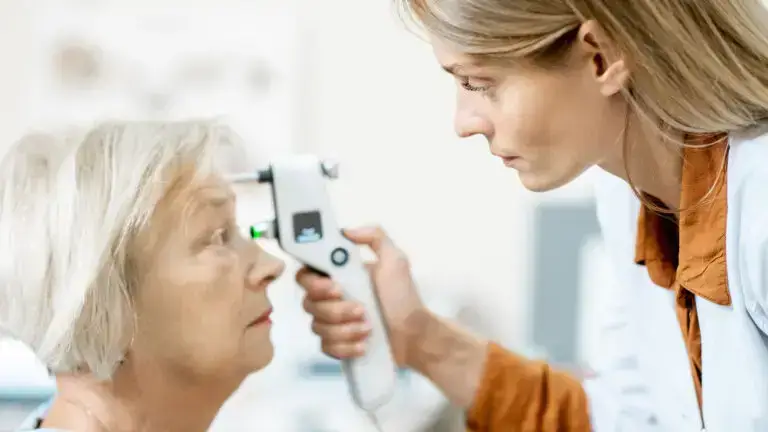
At the Harley Street Eye Centre, advanced diagnostics include Pentacam AXL corneal tomography, which maps the cornea’s shape and thickness; detailed refraction, which checks your prescription; and an assessment of the eye’s surface and any dry eye. Where indicated, endothelial cell assessment checks the health of cells on the inner surface of the cornea.
The scans are acquired by our clinical team, and every assessment is reviewed by the consultant before any recommendation is made. A credible assessment must be equally capable of saying no. A meaningful proportion of patients are advised against corneal laser surgery and towards a safer alternative for their eyes.
Laser Eye Treatment for Chelmsford Patients: Procedures and Platforms
Blue Fin Vision® offers a broad range of laser vision correction procedures through its consultant-led London pathway. Available technologies include SCHWIND and Ziemer platforms, together with access to the ZEISS laser platform where SMILE or PRESBYOND® is clinically preferred. The treatment recommendation and precise arrangements are confirmed after comprehensive diagnostic assessment.
The options depend on your prescription, corneal shape, ocular surface, age and lifestyle:
- Femtosecond LASIK reshapes the cornea beneath a thin flap.
- PRK and TransPRK reshape the corneal surface without creating a flap.
- CLEAR and SMILE remove a small piece of corneal tissue to change how light focuses.
- PresbyMAX® and PRESBYOND® may help suitable patients reduce their dependence on reading glasses.
No single procedure is automatically “best”. The purpose of the assessment is to determine which technology and treatment profile are most appropriate for your eyes. Your consultant will also discuss relevant risks, likely recovery and follow-up before you decide whether to proceed.¹
If Laser Eye Surgery Is Not the Right Operation for You
Some eyes are better served by an implantable collamer lens (ICL), a lens placed inside the eye without removing the natural lens, or by lens replacement surgery. These options may be considered for higher prescriptions, thinner or irregular corneas, significant dry eye, or age-related lens changes.¹
These are honest alternatives selected on suitability, not consolation prizes. Any potential enhancement or further treatment policy will be explained clearly during consultation before you decide whether to proceed.
Surgical experience matters, but the evidence must relate to the operation being discussed. Mr Mfazo Hove’s surgical career spans more than 57,000 ophthalmic procedures. Laser suitability, however, is judged on your corneal diagnostics rather than on volume. Audited cataract outcome figures are not presented here as laser outcomes: they describe intraocular surgery, which is a different operation.

Your Next Step From Essex
Review laser eye surgery, costs and the patient checklist, then book the Harley Street assessment. Whatever the outcome, the goal is the same: the safest operation for your eyes, chosen according to your diagnostic findings and individual clinical suitability.
References
- Kim TI, Alió Del Barrio JL, Wilkins M, Cochener B, Ang M. Refractive surgery. Lancet. 2019;393(10185):2085-2098.
ABOUT THE AUTHOR
Mr Mfazo Hove
MBChB MD FRCOphth CertLRS
Consultant Ophthalmic Surgeon | Founder and Medical Director, Blue Fin Vision®
Mr Mfazo Hove is a Consultant Ophthalmic Surgeon with more than two decades of experience across NHS and private practice and more than 57,000 ophthalmic procedures performed. He trained for six and a half years at Moorfields Eye Hospital and served for five years as an NHS consultant at the Western Eye Hospital, Imperial College Healthcare NHS Trust.
He specialises in cataract surgery, refractive lens replacement, laser vision correction and implantable Collamer lenses (ICL). He is the founder and Medical Director of Blue Fin Vision®, a private ophthalmology group providing consultant-delivered care across London, Hertfordshire and Essex. His cataract surgery outcomes are publicly reported through the National Ophthalmology Database.
A ZEISS Key Opinion Leader and international speaker, Mr Hove is a contributing author to The Ophthalmologist and Ophthalmology Times. His writing examines how clinical governance and the organisation of ophthalmic services shape patients’ experiences and outcomes, with a focus on transparent outcome reporting, surgical training and long-term accountability for patient care.