




- Medically Reviewed by: Mr Mfazo Hove, Consultant Ophthalmic Surgeon
- Author: Mr Mfazo Hove
- Published: October 11, 2025
- Last Updated: October 27, 2026
TL;DR: Look for a surgeon who regularly removes pingueculae, the raised yellowish growths on the white of the eye, publishes their own results and explains when removal will not help. For patients in North West London, pinguecula removal at Blue Fin Vision® takes place at the Harley Street Eye Centre in central London. Surgical removal and, for selected small growths, argon laser treatment are available.
Blue Fin Vision® has removed more than 100 pingueculae between October 2025 and September 2026 and publishes its own before-and-after photographs.
Blue Fin Vision® also operates at Chase Lodge Hospital in Mill Hill. Ask when you book which site suits you for consultation and follow-up.
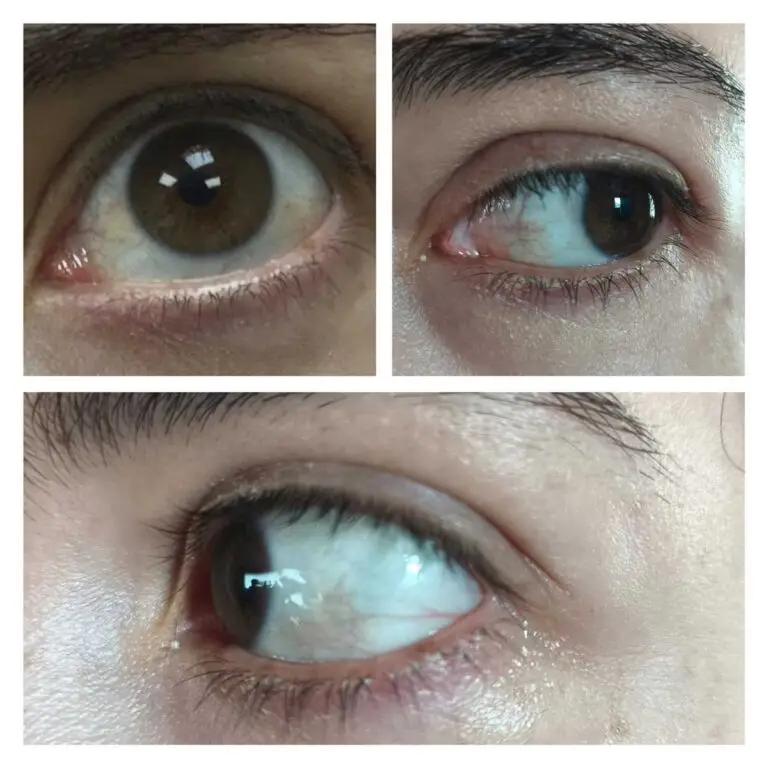
Pinguecula before removal (top left) and the same sites two months after surgical excision.
Choosing Pinguecula Surgery for North West London Patients
When choosing an eye clinic, ask these five questions.
- How Many Pingueculae Do You Remove?
Experience in this specific operation matters more than a surgeon’s overall career total. Ask whether the provider regularly treats more than one growth in an eye, or both eyes in one visit.
- Will Removal Solve My Problem?
Inflamed pingueculae often disturb the nearby corneal surface, the clear front of the eye, and the tear film, the thin layer of tears covering it.¹ Surgical removal of a raised pinguecula can improve dry eye symptoms.²
But if your symptoms have another cause, removal will not fix them. A good consultation says so.
- What Result Can I Realistically Expect?
In a published series of surgical removal with a conjunctival graft, a small piece of tissue used to cover the treated area on the eye’s surface, most patients rated their cosmetic result excellent or good at 12 months.³
A provider should also explain the limits: redness takes weeks to fade, and some fine vessels can remain.
- Removal of Pinguecula With a Laser: Options for North West London Patients
Argon laser treatment uses a focused beam of light to treat the growth. Laser can suit small, flat growths,⁴ but ask why it is being recommended rather than surgical removal and how often it works at the first session.
- Can I See Your Own Results?
Published before-and-after photographs, with the treatment and interval stated, tell you more than any description.
What Happens During the Procedure
The photograph below shows the eye during surgery.

Before surgery (right) and during pinguecula excision (left).
We use lidocaine, a local anaesthetic, with adrenaline, which narrows small blood vessels to reduce bleeding.
We avoid diathermy, which uses heat to seal blood vessels, because heat damage to the sclera, the white outer layer of the eye, could compromise the cosmetic result. Instead, we control bleeding by gently applying pressure with a pad.
You go home the same day wearing sunglasses, with no eye covering. Most people return to work within two to five days.
Sun protection afterwards is worthwhile, since sunlight is associated with new pingueculae forming.⁵
Cost
For North West London patients, the cost of removal of pinguecula depends on how many growths are treated. Surgical removal is priced per pinguecula, with reduced prices for two or more, listed on our costs page.
Read more about treatment, suitability, risks and our locations:
- Pterygium and Pinguecula Removal
- Suitability
- Risks
- Patient Information
- Harley Street Eye Centre
- Chase Lodge Hospital
Book a consultation with Blue Fin Vision® to discuss whether pinguecula removal is suitable for you.
References
- Küçük E, Yilmaz U, Zor KR. Corneal epithelial damage and impaired tear functions in patients with inflamed pinguecula. J Ophthalmol. 2018;2018:2474173. doi:10.1155/2018/2474173.
- Jeong J, Rand GM, Kwon T, Kwon JW. The improvement of dry eye symptoms after pinguecula excision and conjunctival autograft with fibrin glue. J Ophthalmol. 2019;2019:6438157. doi:10.1155/2019/6438157.
- Jung S, Kwon JW, Hwang HS, Chuck RS. Vascular regression after pinguecula excision and conjunctival autograft using fibrin glue. Eye Contact Lens. 2017;43(3):199-202. doi:10.1097/ICL.0000000000000250.
- Ahn SJ, Shin KH, Kim MK, Wee WR, Kwon JW. One-year outcome of argon laser photocoagulation of pinguecula. Cornea. 2013;32(7):971-5.
- Le Q, Xiang J, Cui X, Zhou X, Xu J. Prevalence and associated factors of pinguecula in a rural population in Shanghai, Eastern China. Ophthalmic Epidemiol. 2015;22(2):130-8.
ABOUT THE AUTHOR
Mr Mfazo Hove
MBChB MD FRCOphth CertLRS
Consultant Ophthalmic Surgeon | Founder and Medical Director, Blue Fin Vision®
Mr Mfazo Hove is a Consultant Ophthalmic Surgeon with more than two decades of experience across NHS and private practice and more than 57,000 ophthalmic procedures performed. He trained for six and a half years at Moorfields Eye Hospital and served for five years as an NHS consultant at the Western Eye Hospital, Imperial College Healthcare NHS Trust.
He specialises in cataract surgery, refractive lens replacement, laser vision correction and implantable Collamer lenses (ICL). He is the founder and Medical Director of Blue Fin Vision®, a private ophthalmology group providing consultant-delivered care across London, Hertfordshire and Essex. His cataract surgery outcomes are publicly reported through the National Ophthalmology Database.
A ZEISS Key Opinion Leader and international speaker, Mr Hove is a contributing author to The Ophthalmologist and Ophthalmology Times. His writing examines how clinical governance and the organisation of ophthalmic services shape patients’ experiences and outcomes, with a focus on transparent outcome reporting, surgical training and long-term accountability for patient care.


