TL;DR:Mr Mfazo Hove, consultant ophthalmic surgeon and founder of Blue Fin Vision®, is quoted throughout Stylist’s feature “Dry eyes and blurry vision: 5 unexpected ways that stress can affect your eyes and what you can do about it”. He explains how stress disrupts the tear film, heightens awareness of floaters and contributes to fluctuating vision, alongside practical prevention and remedy advice.
Stress and the Eyes: An Overlooked Connection
The Stylist feature, written by Lisa Bowman, examines how stress affects the body in ways many people overlook, including the eyes. Mr Hove is the article’s lead clinical voice, quoted across several of the symptoms covered.
Dry or Watery Eyes
On how stress disrupts the ocular surface, Mr Hove says:
“Stress commonly affects the ocular surface by disrupting normal blinking patterns and the balance of the tear film. When people are anxious or concentrating for long periods, particularly on screens, blink rate drops significantly and blinks often become incomplete. This leads to increased tear evaporation and instability of the tear film, resulting in dryness, grittiness or a burning sensation.”
On prevention, he advises:
“Prevention is largely behavioural. Regular screen breaks using the 20-20-20 rule (take a 20-second break every 20 minutes to look 20 feet away), combined with conscious full blinking, can significantly improve tear stability. Good hydration, adequate sleep and moderating caffeine intake all support ocular surface health. Screen position is also important. Placing it slightly below eye level reduces ocular surface exposure and slows evaporation.”
On remedies, he recommends preservative-free artificial tears as a first port of call, adding:
Mr Hove explains that stress does not cause floaters, but it can make you more aware of them:
“When the brain is under stress, its ability to filter out background sensory information is reduced. As a result, people become more aware of visual phenomena – such as floaters – that would normally be ignored. Fatigue and certain lighting conditions, particularly bright backgrounds, can further accentuate their visibility.”
On management, he notes that “in many cases, reassurance following a normal eye examination is all that is required”, while flagging when to seek urgent help:
“Any sudden increase in floaters, particularly if associated with flashes of light, a shadow or a curtain-like effect in the vision, should be treated as urgent. These symptoms may indicate vitreoretinal traction or retinal detachment and require prompt assessment through urgent eye care services.”
Blurry Vision
Mr Hove explains that stress can cause blurry vision through a combination of tear film instability, eye strain and focusing fatigue, with prolonged close work keeping the ciliary muscle in sustained contraction. On prevention, he says:
“Prevention centres on reducing continuous visual demand. Regular breaks, optimised screen ergonomics and appropriate lighting all help minimise strain.”
He also stresses the importance of clinical assessment:
“However, persistent, worsening or unexplained blurred vision should always be assessed clinically. It’s important not to attribute all visual symptoms to stress without appropriate evaluation.”
Other Symptoms Covered
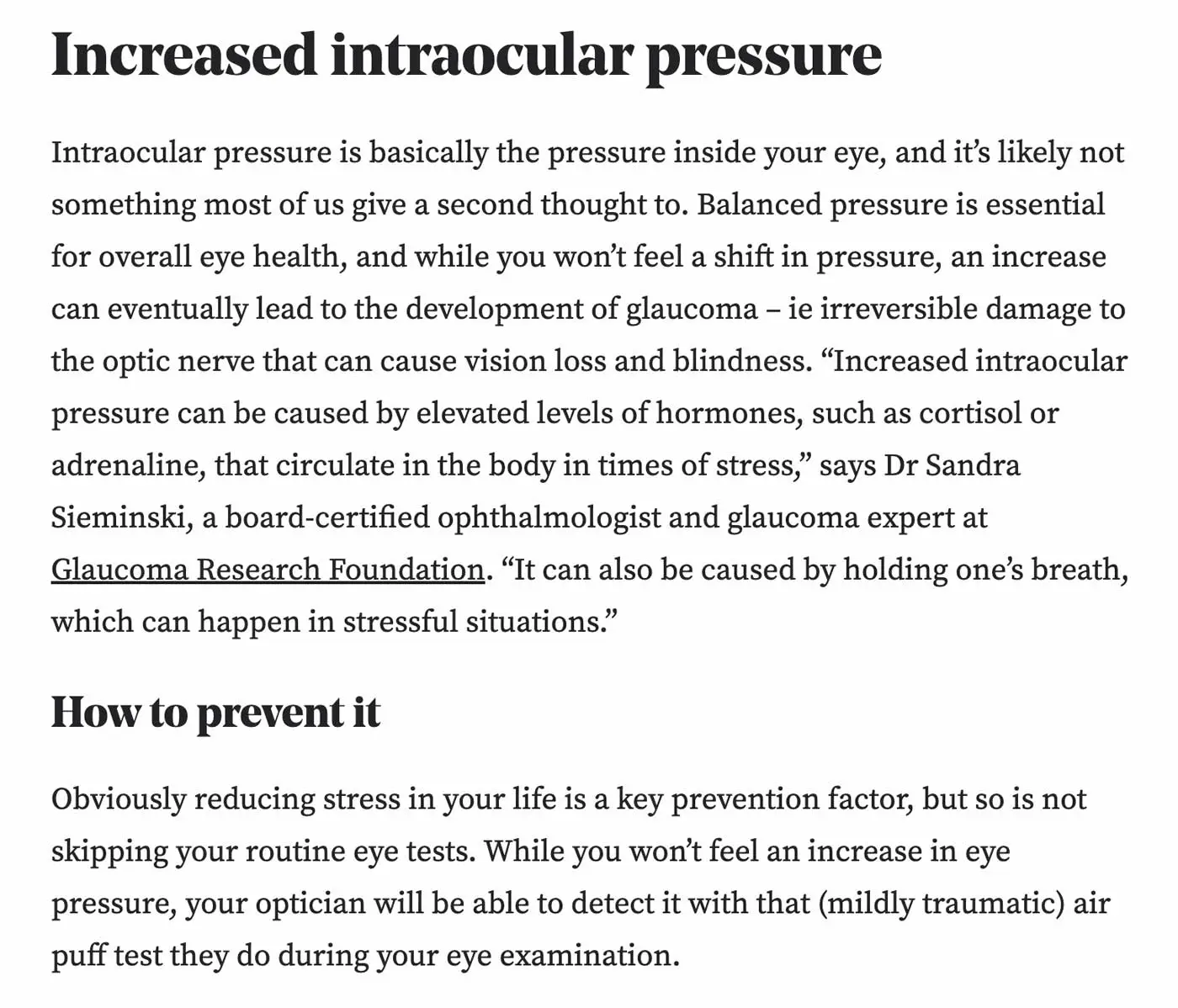
The feature also explores eyelid twitching, with commentary from Dr Nisha Shah, and increased intraocular pressure and its link to glaucoma, with commentary from Dr Sandra Sieminski of the Glaucoma Research Foundation. The article closes with a clear message: if you have any concerns about your eye health or vision, book an appointment with your optometrist.
Authoritative, Consultant-Led Eye Care
The coverage positions Mr Hove as a leading clinical authority on the everyday links between stress and eye health and reinforces Blue Fin Vision’s consultant-led approach to assessment and care.
If stress-related symptoms such as dryness, fluctuating vision or floaters are affecting you, the Blue Fin Vision® team invites you to book a consultation at our consultant-led clinics across London, Hertfordshire and Essex, including Harley Street, Weymouth Street, Chelmsford, Hatfield and Chase Lodge Hospital.