




Best Laser Eye Surgery Clinic in London: Discover Blue Fin Vision® Eye Clinic
- Posted
- Medically Reviewed by: Mr Mfazo Hove, Consultant Ophthalmic Surgeon
- Author: Mr Mfazo Hove
- Published: October 2, 2024
- Last Updated: July 2, 2026
The best laser eye surgery clinic in London is not the one with the lowest advertised price or the busiest waiting room. It is the clinic that assesses your eyes properly, matches the right procedure to them, gives you a named consultant who stays with you from the first scan to the final review, and can point to the evidence behind the results it promises. Price and convenience matter, but they sit below safety, suitability and accountability. This article explains what actually separates an excellent clinic from an average one, and how Blue Fin Vision® is built to meet that standard.
First, The Reassuring Part: Modern Laser Eye Surgery Works
Laser vision correction is one of the most studied elective procedures in medicine, and the evidence is strong. A systematic review of the world literature, drawn from studies across the United States, Europe and Asia, found patient satisfaction above 95% after LASIK.¹ The American Academy of Ophthalmology’s technology assessment, after reviewing the published trials, concluded that LASIK is both safe and effective for the correction of short-sightedness and astigmatism.² Newer techniques have added to this record; small incision lenticule extraction (SMILE) has ten-year data showing stable refractive outcomes with no late loss of vision in the eyes followed.³ In other words, the procedures themselves are mature and dependable.
The catch is that these figures describe the field, not your eyes. A 95% satisfaction rate is an average across many surgeons, technologies and patients. What turns that average into your personal result is the clinic: who assesses you, how thoroughly, on what equipment, who operates, and who looks after you afterwards. This is why choosing well matters.
It is also worth being clear about complications. Serious, sight-threatening problems are uncommon when patients are carefully selected, and the temporary effects that do occur, such as dry eye or night-time glare, usually settle within the first months. The Royal College of Ophthalmologists requires refractive surgeons to audit their results and to seek patient feedback, precisely so that quality is measured rather than assumed; a clinic that audits openly is one that takes responsibility for its outcomes.
What Actually Makes a Clinic the "Best"
Five things separate a genuinely excellent laser clinic from a merely adequate one.
- The surgeon, and their accountability. Laser refractive surgery in the UK should be performed by an ophthalmologist who is on the General Medical Council’s specialist register, holds the Certificate in Laser Refractive Surgery (CertLRS), and works to The Royal College of Ophthalmologists’ Professional Standards for Refractive Surgery. Ask who will operate, and whether you will meet them before the day.
- The depth of the assessment. A safe outcome begins with measurement: detailed corneal mapping, an assessment of corneal thickness and shape, and a careful check of the ocular surface and tear film. Thorough screening is how unsuitable corneas are identified before, not after, surgery.
- The technology. Advanced platforms such as the Schwind Amaris excimer laser, the Ziemer Z8 femtosecond laser and ZEISS PRESBYOND® Laser Blended Vision allow precise, individualised treatment. Technology does not replace judgement, but it raises the ceiling on what a skilled surgeon can achieve.
- Continuity of care. The best clinics keep one named consultant responsible throughout. At Blue Fin Vision® every patient is seen by their surgeon at the consultation, on the day of surgery, and at every post-operative visit; the person who recommends the treatment is the person who delivers it and reviews it.
- Aftercare, and what happens if more is needed. Comprehensive follow-up and included post-operative medication should be part of the package, not an extra. Just as important is a clear, written commitment for the rare cases where an enhancement is needed.
Why This Is a Decision Worth Taking Seriously
Laser surgery reshapes the cornea, and although serious complications are rare in well-screened patients, the procedure is not trivial; that is precisely why the quality of the clinic matters. It is worth remembering that the alternative is not risk-free either.
Contact lens wear is the single largest cause of microbial keratitis, a potentially sight-threatening corneal infection; a landmark national study put the annual incidence among daily wearers of soft lenses at roughly 2 per 10,000 wearers, rising several-fold with overnight wear.⁴ Identifiable behaviours such as poor hygiene and sleeping in lenses increase that risk further.⁵
The honest way to frame the choice is risk against risk; a good clinic is the one that drives the surgical risk as low as it can go through careful selection and technique.
Why Patients Choose Blue Fin Vision® for Laser Eye Surgery
Blue Fin Vision® was founded by Mr Mfazo Hove, Consultant Ophthalmic Surgeon, on a principle set out in the Blue Fin Vision® Doctrine: if something is worth doing to your eyes, it is worth doing properly, and to achieve the immeasurable you must measure everything. Excellence, in that view, is not an event but the product of a system; surgery is delivered by a system, not by a single individual, with every controllable variable measured, structured and owned.
The Doctrine also works as a guide for choosing any surgeon: look for a practice where the recommendation follows the anatomy rather than a conversion target, where the consultation is a clinical assessment rather than a sales interaction, where the surgeon is free to advise against surgery, and where responsibility for the outcome stays with the operating surgeon. That system is what we call the Blue Fin Vision® Advantage.
In practice it means consultant-only surgery, where the same named surgeon plans, performs and oversees your care, with no technician-led lists; LASIK, TransPRK, PresbyMAX® and PRESBYOND® offered through its own laser pathway, so the procedure is matched to your eyes; detailed corneal tomography and pachymetry to map corneal shape and thickness; and outcomes reviewed systematically so that planning is refined over time.
Outcomes are measured and audited, complications and enhancements included, and any enhancement that is needed is planned and managed within the same clinical team. It reflects the practice’s Mission Statement: evidence-based, premium care with transparent, measurable outcomes, built around safety, precision, discretion and trust.
Where SMILE is the right option, Blue Fin Vision® can offer it through a ZEISS VisuMax pathway at EuroEyes; we explain where each step of your care takes place before you book.
It also means standing behind the result. Under the Blue Fin Vision® enhancement policy, if a refinement to your refractive outcome is ever needed after self-pay laser vision correction, it is fully covered by Blue Fin Vision® within 24 months of surgery, with no additional cost and no cost-sharing; you know your coverage before treatment begins.
That standard of care is reflected in independent recognition: a Doctify rating of 4.96 out of 5 from verified patient reviews, and ZEISS Key Opinion Leader status. Recognition is not an outcome in itself, but consistent independent endorsement is a useful signal alongside the clinical evidence.

Questions Worth Asking Before You Book
A short conversation can tell you a great deal about a clinic. Before committing, it is reasonable to ask the following, and to expect specific, unhurried answers.
- Who will perform my surgery, and will I meet them before the day?
- Are you on the GMC specialist register, and do you hold the Certificate in Laser Refractive Surgery?
- Which procedures do you offer, and why are you recommending this one for my eyes?
- What does my assessment include, and what would make me unsuitable?
- What is included in the price, and what happens if I need an enhancement?
- How many of these procedures do you perform, and how do you audit your results?
- Who looks after me if there is a complication, and is specialist support available?
A clinic confident in its surgeons, its screening and its outcomes will welcome these questions. Vagueness, or pressure to decide on the day, is itself an answer.
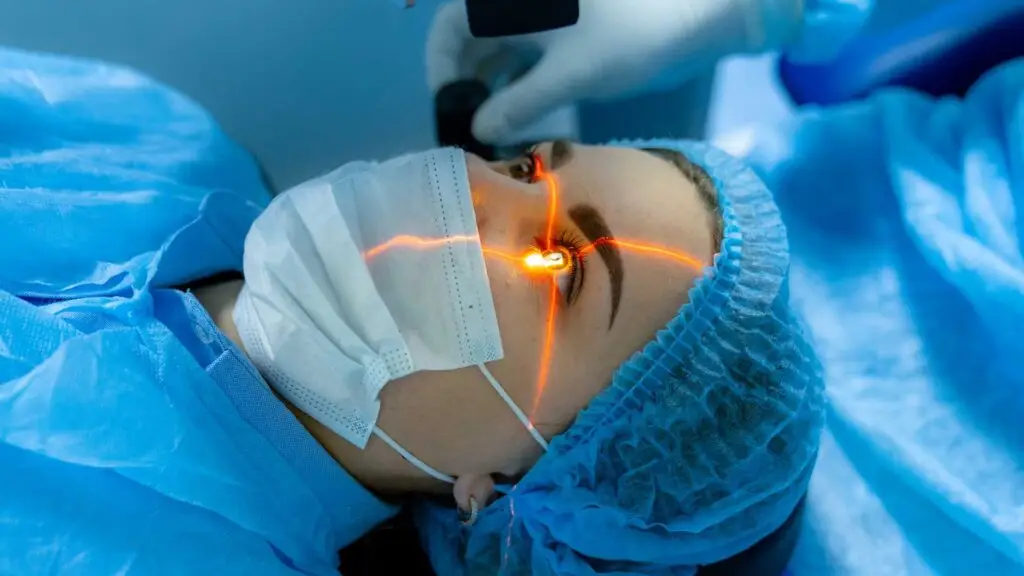
It also helps to understand the journey. At a well-run clinic the pathway is consistent: a thorough assessment with corneal mapping and an ocular surface check; a frank discussion of whether surgery is right for you and which procedure fits; the day-case procedure itself, performed under local anaesthetic drops and taking only minutes per eye; and structured follow-up with medication included. Knowing the shape of that journey in advance makes it far easier to compare one clinic with another, and to recognise a thorough service when you see one.
Where Blue Fin Vision® Treats Patients
Laser assessment and treatment are based at our London clinics, making Blue Fin Vision® one of the best laser eye clinics London patients can turn to, with consultations also available across the wider practice in Hertfordshire and Essex. Wherever you are seen, the assessment, the technology standard and the named-consultant model are the same.

The Bottom Line
The best laser eye surgery clinic in London is the one that assesses you honestly, matches the procedure to your eyes, gives you a named and accountable surgeon, and stands behind the result. If you would like to find out whether laser correction suits you, book a consultation using the form below or try the surgery suitability self-test.
References
- Solomon KD, Fernández de Castro LE, Sandoval HP, Biber JM, Groat B, Neff KD, Ying MS, French JW, Donnenfeld ED, Lindstrom RL; Joint LASIK Study Task Force. LASIK world literature review: quality of life and patient satisfaction. Ophthalmology. 2009;116(4):691-701.
- Sugar A, Rapuano CJ, Culbertson WW, Huang D, Varley GA, Agapitos PJ, de Luise VP, Koch DD. Laser in situ keratomileusis for myopia and astigmatism: safety and efficacy: a report by the American Academy of Ophthalmology. Ophthalmology. 2002;109(1):175-187.
- Blum M, Lauer AS, Kunert KS, Sekundo W. 10-year results of small incision lenticule extraction. J Refract Surg. 2019;35(10):618-623.
- Stapleton F, Keay L, Edwards K, Naduvilath T, Dart JK, Brian G, Holden BA. The incidence of contact lens-related microbial keratitis in Australia. Ophthalmology. 2008;115(10):1655-1662.
- Dart JK, Radford CF, Minassian D, Verma S, Stapleton F. Risk factors for microbial keratitis with contemporary contact lenses: a case-control study. Ophthalmology. 2008;115(10):1647-1654.
ABOUT THE AUTHOR
Mr Mfazo Hove
Consultant Ophthalmic Surgeon
MBChB MD FRCOphth CertLRS
Mr Mfazo Hove is a Consultant Ophthalmic Surgeon with experience spanning more than 57,000 procedures. He completed 6.5 years of specialist training at Moorfields Eye Hospital and served for five years as a consultant at the Western Eye Hospital, Imperial College Healthcare NHS Trust. He is the founder of Blue Fin Vision®, a consultant-led private ophthalmology practice operating across London, Essex, and Hertfordshire. His clinical expertise encompasses advanced cataract surgery, refractive lens replacement, laser vision correction, and implantable Collamer lenses (ICL).
A ZEISS Key Opinion Leader, Mr Hove is a respected international speaker with five invited engagements across seven cities in 2026:
- ZEISS China tour (Changsha, Shanghai, and Hangzhou, April – ZEISS APAC User Meeting)
- RCOphth Annual Congress – May – Manchester
- ZEISS EMEA User Meeting (Istanbul)
- ZEISS Lausanne User Meeting (Lausanne)
- European Society of Cataract and Refractive Surgeons Annual Congress (ESCRS, London)


