Beyond Sight Restoration: Why Modern Cataract Surgery Is Now a Life-Enhancing Refractive Procedure
- Posted
- Medically Reviewed by: Mr Mfazo Hove, Consultant Ophthalmic Surgeon
- Author: Mr Mfazo Hove
- Published: January 23, 2026
- Last Updated: May 1, 2026
Mr Hove has performed more than 57,000 cataract and refractive procedures. He has also undergone cataract surgery himself and lives daily with the visual outcomes of modern lens technology, including ZEISS AT LISA trifocal lenses implanted in his own eyes for the past two years.
Modern Cataract Surgery: More Than Just Removing a Cataract
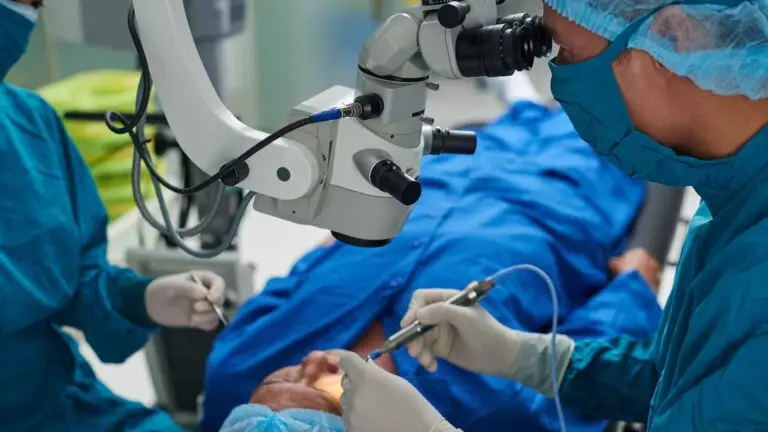
Cataract surgery is often described as a routine operation: removing a cloudy lens and replacing it with a clear one. That is technically correct, but it no longer captures what modern cataract surgery can achieve when it is planned thoughtfully and delivered to a high standard.
Today, cataract surgery has the potential not only to restore sight, but to:
- Sharpen vision for reading, screens, and faces
- Reduce dependence on glasses
- Improve confidence for driving and daily activities
- Enhance quality of life in ways many patients do not anticipate
How well this happens depends on the decisions made beforehand.
Cataract Surgery as Refractive, Life-Enhancing Surgery
Patients rarely judge success in purely clinical terms. Instead, they talk about real-life changes such as:
- Reading comfortably without holding text at arm’s length
- Driving with confidence, particularly at night
- Recognising faces clearly again
- Using phones, tablets, and computers more easily
- Feeling visually sharp, capable, and independent
Modern cataract surgery increasingly aims to deliver these outcomes by treating the procedure as refractive surgery, not simply cataract removal. This reflects a broader understanding: how well a patient sees after surgery, and how independent they are from glasses, matters just as much as removing the cataract safely.
Freedom From Glasses: Possible, But Planned
One of the most common questions patients now ask is whether cataract surgery can free them from glasses. For many people, the answer is yes, potentially. But achieving this outcome is never accidental. It requires planning.
Spectacle independence depends on:
- Careful assessment of your eyes and lifestyle
- Honest, realistic discussion about what is achievable
- Appropriate selection of lens type and target focus
- Precision in measurements and surgical technique
Premium lenses can extend vision across multiple distances, but they are not suitable for every eye or every lifestyle. The goal is not to promise perfection, but to design vision that matches how you use your eyes day to day.
Premium Lens Options: Choice Should Be Individualised
Modern cataract surgery offers a range of lens options, including:
- Monofocal lenses – Clear vision at one distance (usually distance), with glasses still needed for near tasks
- Toric lenses – Correct corneal astigmatism, delivering sharper, more stable vision
- Trifocal and extended-depth-of-focus (EDOF) lenses – Reduce dependence on glasses for distance, intermediate, and near tasks
Each design involves benefits and compromises. Choosing the right lens requires:
- Experience and surgical judgment
- Accurate, verified diagnostic data
- A clear understanding of how you use your vision (driving, reading, computer work, hobbies)
This is where structured planning and experience make a decisive difference to long-term satisfaction.
Why I Chose the Same Lenses I Use for My Patients in My Own Eyes

In my own case, I chose ZEISS AT LISA trifocal lenses for my cataract surgery. Before having these lenses myself, I would tell patients that trifocals provide three main focal points – near, intermediate, and distance. My personal experience has been even better than that.
I now enjoy continuously clear vision from around 15 cm from my nose all the way into the distance.
I noticed some glare and haloes around lights in the first few days after surgery, but these became negligible within about three days. I have been completely spectacle-independent since my surgery, including while performing over 5,000 operations during that time.
This personal experience directly informs how I counsel patients on expectations, visual adaptation, and the realistic benefits of trifocal lenses.
The Diagnostic Suite: The Foundation of Modern Cataract Surgery
While surgical skill and intra-operative safety are fundamental, the predictability and quality of vision after cataract surgery depend heavily on the planning that occurs beforehand. Leading centres increasingly rely on comprehensive diagnostic datasets to identify risk, guide lens choice, and avoid preventable surprises.
- Biometry: the starting point
Biometry measures axial length and corneal power to calculate the strength of the artificial lens. Because refractive accuracy depends on measurements taken to fractions of a millimetre, reliance on a single data source increases the risk of error.
At Blue Fin Vision®, double biometry is standard. Every patient is measured using two independent technologies – swept-source OCT biometry and optical biometry – to verify results. This approach reduces refractive outliers and contributes to our low post-operative enhancement rate of approximately 2–3%.
- Retinal OCT: a minimum standard of care
OCT imaging of the retina allows subtle pathology, such as early macular changes or glaucoma, to be identified and addressed before surgery. This enables:
- More accurate counselling and expectation-setting
- Targeted use of anti-inflammatory treatment when needed
- Better long-term visual outcomes
- Corneal topography: essential for astigmatism and trifocal lenses
Accurate corneal mapping is critical for:
- Detecting and quantifying astigmatism
- Identifying suitable candidates for toric lenses
- Ensuring trifocal lenses are used selectively, not indiscriminately
- Whole-eye aberrometry: refining optical quality
Aberrometry assesses optical quality beyond basic refractive focus. It informs lens selection and discussions around:
- Contrast sensitivity
- Night vision performance
- Overall visual clarity and quality
- Endothelial cell count (ECC): assessing corneal health
ECC evaluation assesses the health and resilience of the corneal endothelium, which is responsible for maintaining corneal clarity. Identifying reduced endothelial reserve allows:
- Adaptation of surgical technique
- Tailoring of post-operative care
- Reduced risk of prolonged recovery or corneal compromise
Taken together, these investigations form a system of verification and risk mitigation, rather than isolated tests. The result is more predictable outcomes and better visual quality over the long term.
Using Data and Artificial Intelligence to Refine Outcomes
Modern cataract surgery also benefits from intelligent use of outcome data. At advanced centres, large datasets are analysed to:
- Identify patterns in refractive accuracy
- Refine lens-selection strategies
- Optimise refractive targets for different eye types
Artificial intelligence acts as a decision-support tool, helping clinicians recognise trends that may not be visible at an individual level. It does not replace clinical judgment; it strengthens it through consistency, learning, and continuous refinement.
Recording Consultations and Surgery: Transparency and Learning
A further hallmark of high-quality cataract care is the routine recording of consultations and surgical procedures. This supports:
- Transparency for patients
- Stronger informed consent
- Audit, teaching, and reflective practice
At Blue Fin Vision®, patients receive copies of all scans, consultation findings, and correspondence. Surgical videos can also be provided on request.
Outcomes that are Measured and Reviewed
High-quality cataract care is defined not only by what happens during surgery, but by how outcomes are measured afterwards. In the UK, results are benchmarked through the National Ophthalmology Database (NOD).
Mr Hove has performed more than 30,000 cataract and refractive procedures in the past five years alone, with outcomes published transparently on the Blue Fin Vision® website.

What Patients Should Take Away
There are a few key points every patient should understand:
- Modern cataract surgery can be life-changing, not just sight-restoring
- Freedom from glasses is possible, but requires careful planning
- Premium lens options exist and should be chosen individually
- High-quality care relies on verification, structure, and review
- Outcomes should be measured and benchmarked, not taken on trust.
A Final Thought
When Cataract surgery is planned and delivered well, it can restore clarity, confidence and independence in ways many patients do not expect.
Understanding what high-quality care looks like give you the best chance of achieving the best possible outcome. At Blue Fin Vision®, Mr Hove and the team set out to achieve this for every patient, every time.