
GLP-1 Medications and Your Vision: Balancing the Headlines with Clinical Facts
- Posted
- Medically Reviewed by: Mr Mfazo Hove, Consultant Ophthalmic Surgeon
- Author: Mr Mfazo Hove
- Published: July 16, 2026
- Last Updated: July 16, 2026
Mr Mfazo Hove, Consultant Ophthalmic Surgeon and Medical Director of Blue Fin Vision®, was invited by Newsweek to comment on new research linking GLP-1 medications to a rare optic nerve condition. Here he sets out what the findings mean, and what patients should do.
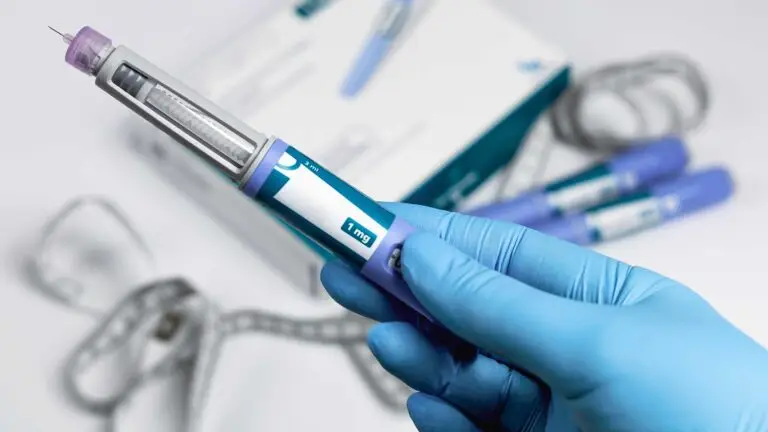
GLP-1 receptor agonists have transformed the treatment of type 2 diabetes and obesity. Medications such as semaglutide (marketed as Ozempic and Wegovy) and tirzepatide (marketed as Mounjaro and Zepbound) are now used by millions of people worldwide. As their use has grown, so has scrutiny of their safety profile, and one question in particular has reached patients: could these medications affect the eyes?
A major international study published in the Annals of Internal Medicine has renewed interest in whether GLP-1 medications may be associated with a rare optic nerve condition that can cause sudden vision loss. ¹ Blue Fin Vision® Medical Director Mr Mfazo Hove was invited to comment on the findings. ⁶
FEATURED IN NEWSWEEK
Read Mr Mfazo Hove’s expert commentary in Newsweek on the new GLP-1 research. ⁶
What Did the Research Actually Find?
Researchers at Rutgers University analysed United States health insurance records for adults aged 18 to 65 with type 2 diabetes, treated between 2017 and 2022. Using a technique called target trial emulation, which is designed to mimic the structure of a randomised trial using real-world data, they compared patients starting a GLP-1 medication with patients starting two other classes of diabetes drug: SGLT2 inhibitors and DPP4 inhibitors. ¹
Over 18 months, ischaemic optic neuropathy occurred in roughly 8.5 per 10,000 GLP-1 users, compared with about 5.5 per 10,000 among those taking SGLT2 inhibitors. In the comparison with DPP4 inhibitors, the figures were 7.8 versus 4.2 per 10,000. In practical terms, this represents around three to four additional cases per 10,000 patients treated over 18 months, or fewer than one extra case for every 2,000 people treated. ¹
The researchers were explicit that their study identified an association, not proof that the medications cause the condition. Differences in patients’ underlying health may account for part of the signal. A companion study from the Karolinska Institutet in Sweden, published on the same day, reached a broadly similar conclusion, and found that the association weakened once background treatment was taken into account. ²
Although the relative increase appears significant, the condition itself remains uncommon, which is why ophthalmologists focus on early recognition and prompt assessment rather than avoidance of an otherwise valuable treatment.
What Is Ischaemic Optic Neuropathy?
Ischaemic optic neuropathy occurs when the blood supply to the optic nerve, the structure that carries visual information from the eye to the brain, is reduced. More than three-quarters of cases are the non-arteritic anterior form, known as NAION. It typically causes sudden, painless blurring, dimming or loss of part of the visual field in one eye. Complete blindness is uncommon, but the visual deficit is often permanent. People with diabetes are already at increased risk of the condition, which is one reason these findings call for careful interpretation rather than a headline-driven reaction.
Mr Hove's Perspective: Vigilance, Not Alarm
Mr Mfazo Hove told Newsweek that any potential risk has to be weighed against the well-established benefits of GLP-1 medications, which include improved blood sugar control, significant weight loss and a reduced risk of cardiovascular disease. ⁶
“The right response to this research is vigilance and monitoring, not alarm.”*
He was equally clear that new symptoms should never be dismissed. “Any sudden change in vision should be treated as a medical emergency,” he said. “These symptoms are not always due to ischaemic optic neuropathy and often have other explanations, but they should never be ignored or left in the hope they settle.”
Symptoms to Watch For
Patients taking a GLP-1 medication should be alert to any sudden or unexplained change in vision. In particular, seek prompt assessment if you notice:
- Painless loss of vision or blurring in one eye
- Dimming of vision
- A change in colour perception
- A missing or shaded area within the field of view
Any of these warrants prompt assessment, whether or not the cause turns out to lie in the optic nerve. Symptoms of this kind have several possible explanations, but they should never be ignored in the hope that they settle.

Putting the Evidence in Context
The relationship between GLP-1 medications and optic nerve disease has been debated since 2024, when a team at Massachusetts Eye and Ear first reported a possible link with semaglutide. ³ A large Danish cohort study later suggested the five-year risk of NAION was roughly doubled in semaglutide users, ⁴ while other analyses have found no clear elevation in risk. ⁵ The evidence remains mixed, and the absolute numbers stay low across every study. What is consistent is the message for patients: these are effective medications with substantial benefits, and the sensible course is informed monitoring rather than avoidance.
How Blue Fin Vision® Can Help
If you take a GLP-1 medication and notice any change in your vision, you should seek assessment without delay. At Blue Fin Vision®, our consultant-led team can provide urgent evaluation of the optic nerve and wider visual system and can advise you and your prescribing doctor on next steps. No one should stop a prescribed medication based on a news report alone. Decisions of that kind should be made with your medical team, informed by your individual circumstances.
Clinical Takeaway
GLP-1 medications are associated with a small increase in the risk of a rare optic nerve condition, but the absolute risk is low and must be balanced against significant, well-established benefits. Know the warning signs, treat any sudden change in vision as urgent, and make treatment decisions with your clinicians rather than in response to headlines.
References
- Reynolds KR, O’Malley KM, Roy JA, Dave CV. Glucagon-Like Peptide-1 Receptor Agonists and Risk for Ischemic Optic Neuropathy. Annals of Internal Medicine. 2026. doi:10.7326/ANNALS-25-00860.
- Ueda P, Svanström H, Söderling J, Pazzagli L, Wintzell V, Eliasson B, Hviid A, Pasternak B. Glucagon-Like Peptide-1 Receptor Agonists and Risk for Anterior Ischemic Optic Neuropathy: A Nationwide Cohort Study. Annals of Internal Medicine. 2026. doi:10.7326/ANNALS-25-02096.
- Hathaway JT, Shah MP, Hathaway DB, Zekavat SM, Krasniqi D, Gittinger JW Jr, Cestari D, Mallery R, Abbasi B, Bouffard M, Chwalisz BK, Estrela T, Rizzo JF 3rd. Risk of Nonarteritic Anterior Ischemic Optic Neuropathy in Patients Prescribed Semaglutide. JAMA Ophthalmology. 2024;142(8):732-739. doi:10.1001/jamaophthalmol.2024.2296.
- Grauslund J, Taha AA, Molander LD, Kawasaki R, Möller S, Højlund K, Stokholm L. Once-weekly semaglutide doubles the five-year risk of nonarteritic anterior ischemic optic neuropathy in a Danish cohort of 424,152 persons with type 2 diabetes. International Journal of Retina and Vitreous. 2024;10(1):97. doi:10.1186/s40942-024-00620-x.
- Choi T, Al-Aly Z, Xie Y. GLP-1 Receptor Agonists or SGLT2 Inhibitors and Nonarteritic Anterior Ischemic Optic Neuropathy. JAMA Network Open. 2026;9(4):e269917. doi:10.1001/jamanetworkopen.2026.9917.
- Gray D. Popular GLP-1 Weight Loss Drugs Linked to Risk of Sudden Vision Loss. Newsweek. 15 July 2026. Available from: https://www.newsweek.com/glp-1-weight-loss-drugs-linked-risk-vision-loss-12199139
ABOUT THE AUTHOR
Mr Mfazo Hove
Consultant Ophthalmic Surgeon
MBChB MD FRCOphth CertLRS
Mr Mfazo Hove is a Consultant Ophthalmic Surgeon with experience spanning more than 57,000 procedures. He completed 6.5 years of specialist training at Moorfields Eye Hospital and served for five years as a consultant at the Western Eye Hospital, Imperial College Healthcare NHS Trust. He is the founder of Blue Fin Vision®, a consultant-led private ophthalmology practice operating across London, Essex, and Hertfordshire. His clinical expertise encompasses advanced cataract surgery, refractive lens replacement, laser vision correction, and implantable Collamer lenses (ICL).
A ZEISS Key Opinion Leader, Mr Hove is a respected international speaker with five invited engagements across seven cities in 2026:
- ZEISS China tour (Changsha, Shanghai, and Hangzhou, April – ZEISS APAC User Meeting)
- RCOphth Annual Congress – May – Manchester
- ZEISS EMEA User Meeting (Istanbul)
- ZEISS Lausanne User Meeting (Lausanne)
- European Society of Cataract and Refractive Surgeons Annual Congress (ESCRS, London)
Speak to Our Consultant-Led Team
If you take a GLP-1 medication and have noticed any change in your vision, do not wait to have it checked. At Blue Fin Vision®, our consultant-led team can provide urgent assessment of the optic nerve and wider visual system and advise you and your prescribing doctor on the right next steps. Book a consultation across our London, Hertfordshire and Essex locations, and trust your vision to a UK clinic with documented outcomes.