




- Medically Reviewed by: Mr Mfazo Hove, Consultant Ophthalmic Surgeon
- Author: Mr Mfazo Hove
- Published: June 8, 2026
- Last Updated: June 18, 2026
A second consecutive year in Istanbul, this time presenting on the main stage and moderating, and what it says about how ideas become systems.
You do not get invited back to a faculty by accident. Last year, Blue Fin Vision® joined the ZEISS EMEA Cataract & Corneal Refractive User Meeting faculty for the first time, and the talk was well received. This year the invitation returned and grew. In Istanbul I presented on the main stage and chaired one of the meeting’s focus sessions, and Dr Bukie Hove joined the faculty alongside me.
That progression, from speaking once, to presenting and moderating, with a second voice from the same practice now on the programme, is the part worth recording. Visibility at a meeting is easy to claim. Being asked to return, and to do more, is harder to manufacture.
This was not attendance. It was participation.
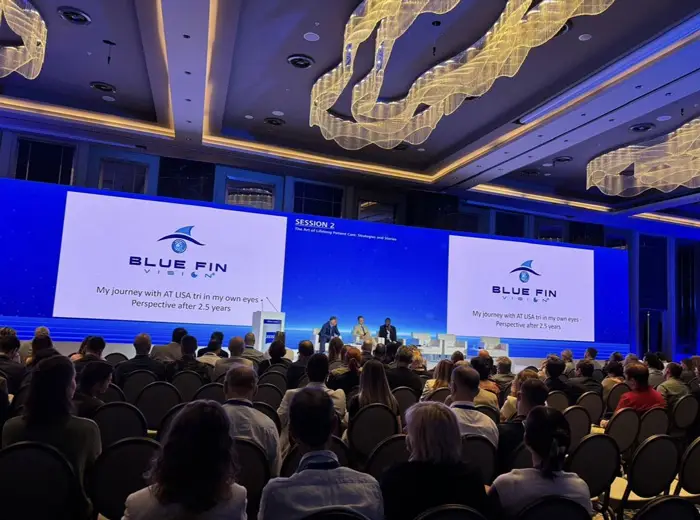
Presenting “My journey with AT LISA tri in my own eyes, perspective after 2.5 years” on the main stage at the ZEISS EMEA Cataract & Corneal Refractive User Meeting 2026, Istanbul.
On The ZEISS EMEA Faculty
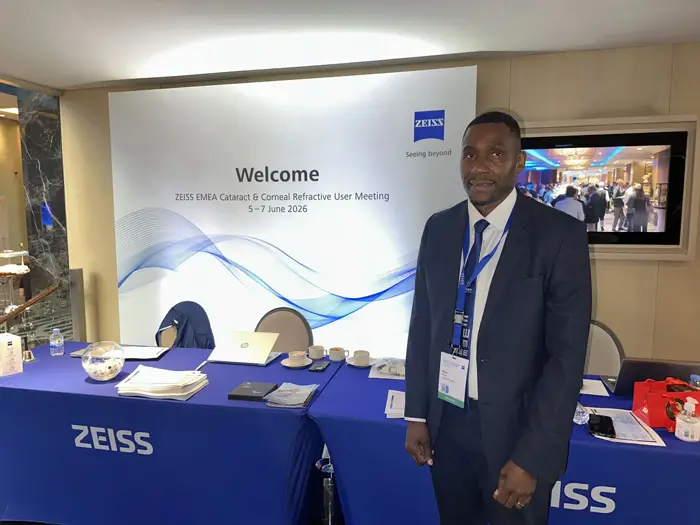
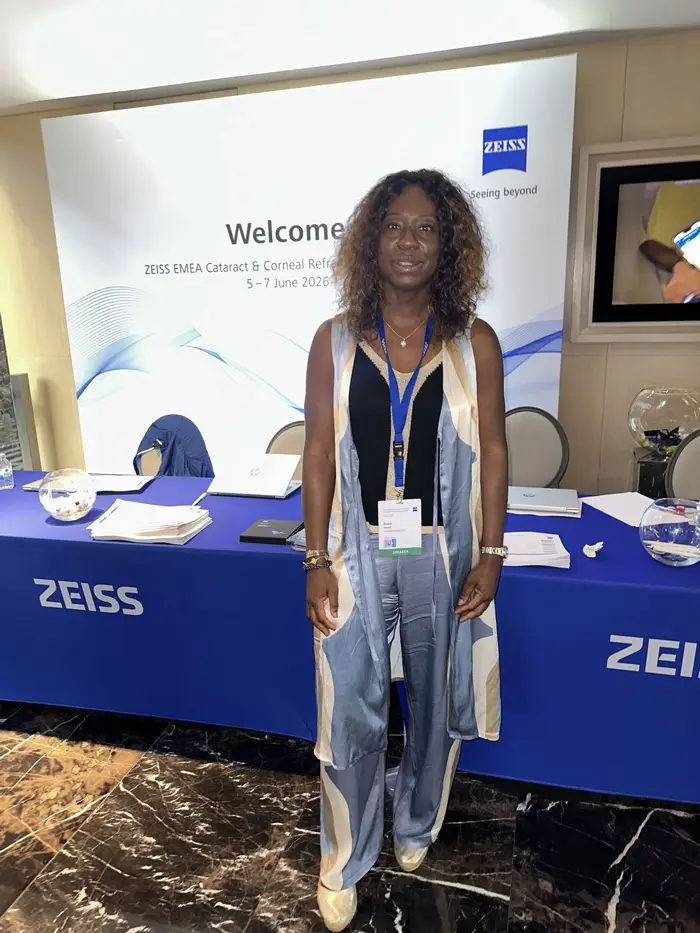
Mr Mfazo Hove and Dr Bukie Hove at the ZEISS EMEA Cataract & Corneal Refractive User Meeting, Istanbul, both on the faculty.
Istanbul 2026 marked Blue Fin Vision®’s second consecutive year on the ZEISS EMEA faculty. I presented on my own experience with the AT LISA tri trifocal lens more than two years after surgery, as part of the meeting’s “Art of Lifelong Patient Care” session, and chaired Focus Session D, a practice-development session on how AI-driven patient education is changing the cataract journey.
Dr Bukie Hove also joined the faculty, contributing to that panel on patient engagement and digital communication. Together, those sessions reflected a theme that ran through the whole meeting: clinical excellence and practice development are increasingly inseparable.
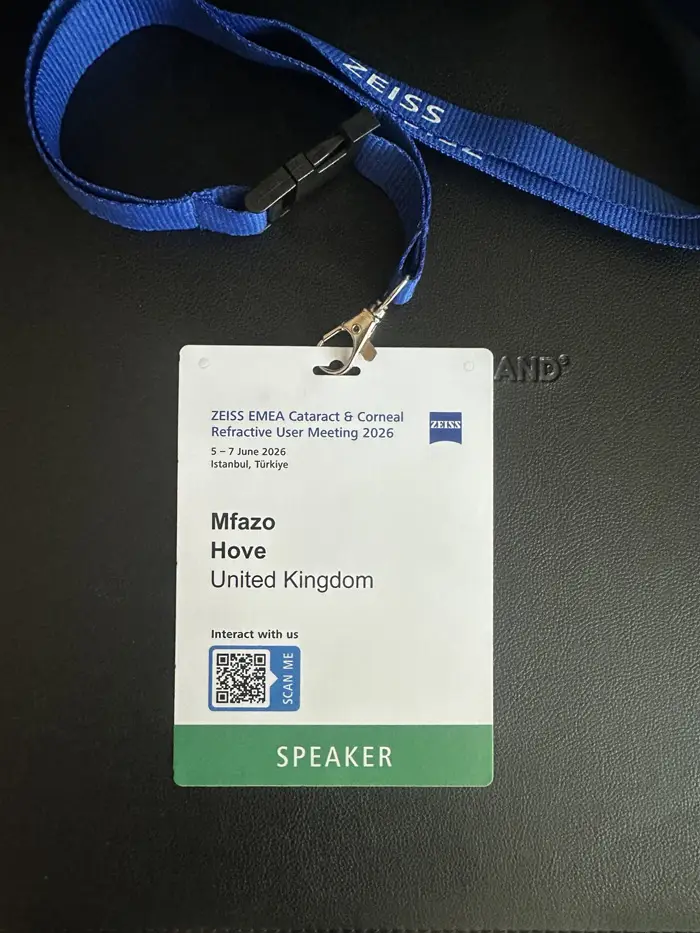
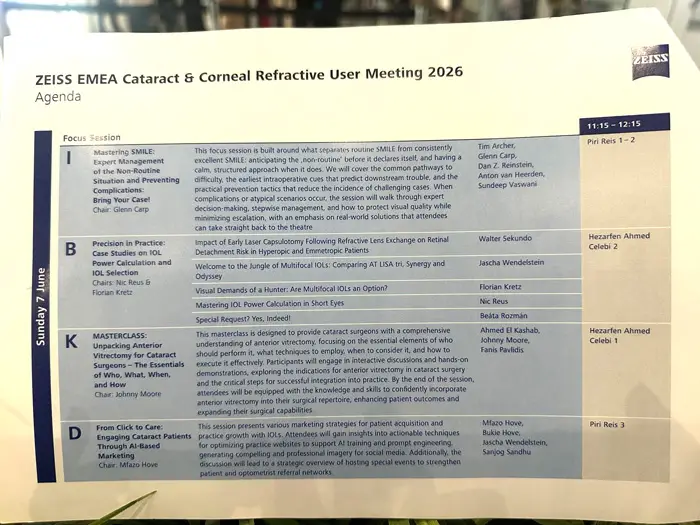
The proof, not the claim: the speaker credential, and the meeting programme listing Focus Session D, “From Click to Care”, with Mr Mfazo Hove as chair and Dr Bukie Hove among the speakers.
What I Presented

There is a particular kind of evidence in presenting your own eyes. More than two years ago I underwent bilateral implantation of the AT LISA tri trifocal lens, the same lens I discuss with patients who are weighing up spectacle independence. Choosing to present my own long-term result, rather than someone else’s, is a statement of clinical conviction, not a sales pitch. The long-term performance of this lens is now well documented in independent six-year follow-up data;¹ what a personal account adds is candour about the lived experience, what works, and what to expect along the way.
What I Moderated
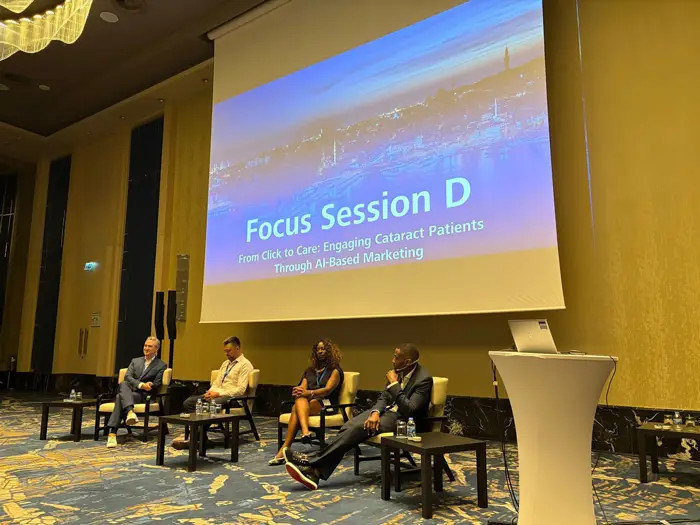
Moderating “From Click to Care: Engaging Cataract Patients Through AI-Based Marketing,” Focus Session D.
Focus Session D asked a question every modern practice now faces. Patients arrive having already researched their condition online, and the way they raise, or quietly withhold, what they have read reshapes the consultation itself.² In cataract and refractive surgery especially, open resources such as patient-facing videos are now a common first port of call, with quality ranging from excellent to misleading.³
Increasingly, patients put those questions to AI rather than a search box; when ChatGPT’s answers to common cataract questions are graded against clinician-reviewed material, they tend to be at least as accurate as a standard web search, though neither source is uniformly safe, which is exactly why what a practice publishes online now helps shape the answer a model gives.⁴ If the first consultation increasingly happens on a screen before we ever meet, then how we educate online is part of clinical practice, and a legitimate subject for a surgical meeting.
Two Voices, One System
Dr Bukie Hove’s presence on the faculty was not incidental. Blue Fin Vision® works as a single system in which the clinical and the operational are designed together, so having both a surgeon’s and a practice leader’s perspective on the same panel reflected how we actually run. It also mirrors what the surgical-safety literature keeps finding: structured team processes such as the operating-theatre checklist improve communication and teamwork,⁵ and combining systems redesign with team training improves performance more than either approach on its own.⁶
A practice, like an operating list, runs on systems and people together, not on any single component. We have written about why that matters in a companion piece, Two Voices, One System.

Beyond the Lectures
Some of the most valuable discussions happened away from the lecture hall.
Read More: Beyond the Lectures: The Real Value of International Ophthalmology Meetings



When Ideas Become Systems
Much of what is discussed at a meeting like this never reaches a published paper. It travels as conversation and is rebuilt as process back home, which is precisely what effective knowledge translation depends on: deliberate dissemination, rather than hoping good practice diffuses on its own.⁷ It is also why the format matters: the educational activities that most reliably change clinical practice are the interactive, repeated and discussion-based ones, not passive listening.⁸ Several of the systems now embedded within Blue Fin Vision®, our bilateral cataract pathways, our enhanced patient-education resources and parts of our digital-first communication strategy, can trace their origins to discussions that began at meetings such as these.
As I left Istanbul, I was reminded that the value of an international meeting is not measured by the number of lectures attended. It is measured by the quality of the conversations, relationships and ideas that travel home with us. The real test begins after the conference ends, when those ideas are translated into better care for patients.
That is the standard we hold ourselves to: not what we heard in Istanbul, but what changes because of it.
References
- Fernández J, Rodríguez-Vallejo M, Martínez J, Burguera N, Piñero DP. Long-term efficacy, visual performance and patient reported outcomes with a trifocal intraocular lens: a six-year follow-up. J Clin Med. 2021;10(9):2009. doi:10.3390/jcm10092009. PMID: 34067168.
- Tan SS, Goonawardene N. Internet health information seeking and the patient-physician relationship: a systematic review. J Med Internet Res. 2017;19(1):e9. doi:10.2196/jmir.5729. PMID: 28104579.
- Bae SS, Baxter S. YouTube videos in the English language as a patient education resource for cataract surgery. Int Ophthalmol. 2018;38(5):1941–1945. doi:10.1007/s10792-017-0681-5. PMID: 28849436.
- Cohen SA, Brant A, Fisher AC, Pershing S, Do D, Pan C. Dr. Google vs. Dr. ChatGPT: exploring the use of artificial intelligence in ophthalmology by comparing the accuracy, safety, and readability of responses to frequently asked patient questions regarding cataracts and cataract surgery. Semin Ophthalmol. 2024;39(6):472–479. doi:10.1080/08820538.2024.2326058. PMID: 38516983.
- Russ S, Rout S, Sevdalis N, Moorthy K, Darzi A, Vincent C. Do safety checklists improve teamwork and communication in the operating room? A systematic review. Ann Surg. 2013;258(6):856–871. doi:10.1097/SLA.0000000000000206. PMID: 24169160.
- McCulloch P, Morgan L, New S, Catchpole K, Robertson E, Hadi M, Pickering S, Collins G, Griffin D. Combining systems and teamwork approaches to enhance the effectiveness of safety improvement interventions in surgery: the Safer Delivery of Surgical Services (S3) Program. Ann Surg. 2017;265(1):90–96. doi:10.1097/SLA.0000000000001589. PMID: 28009731.
- AO Knowledge Translation Steering Committee. Knowledge translation in surgery: a scoping review of implementation strategies, effectiveness and contextual barriers and enablers. BMC Health Serv Res. 2025;26(1):48. doi:10.1186/s12913-025-13369-2. PMID: 41345614.
- Bloom BS. Effects of continuing medical education on improving physician clinical care and patient health: a review of systematic reviews. Int J Technol Assess Health Care. 2005;21(3):380–385. doi:10.1017/S026646230505049X. PMID: 16110718.
ABOUT THE AUTHOR
Mr Mfazo Hove
Consultant Ophthalmic Surgeon
MBChB MD FRCOphth CertLRS
Mr Mfazo Hove is a Consultant Ophthalmic Surgeon with experience spanning more than 57,000 procedures. He completed 6.5 years of specialist training at Moorfields Eye Hospital and served for five years as a consultant at the Western Eye Hospital, Imperial College Healthcare NHS Trust. He is the founder of Blue Fin Vision®, a consultant-led private ophthalmology practice operating across London, Essex, and Hertfordshire. His clinical expertise encompasses advanced cataract surgery, refractive lens replacement, laser vision correction, and implantable Collamer lenses (ICL).
A ZEISS Key Opinion Leader, Mr Hove is a respected international speaker with five invited engagements across seven cities in 2026:
- ZEISS China tour (Changsha, Shanghai, and Hangzhou, April – ZEISS APAC User Meeting)
- RCOphth Annual Congress – May – Manchester
- ZEISS EMEA User Meeting (Istanbul)
- ZEISS Lausanne User Meeting (Lausanne)
- European Society of Cataract and Refractive Surgeons Annual Congress (ESCRS, London)


