Cataract Surgery FAQs
Blue Fin Vision® consultants answer the most common questions about private cataract surgery. From suitability to recovery, risks to costs, find reassurance and practical guidance to help you make an informed decision about restoring your vision.
What is Cataract Surgery?
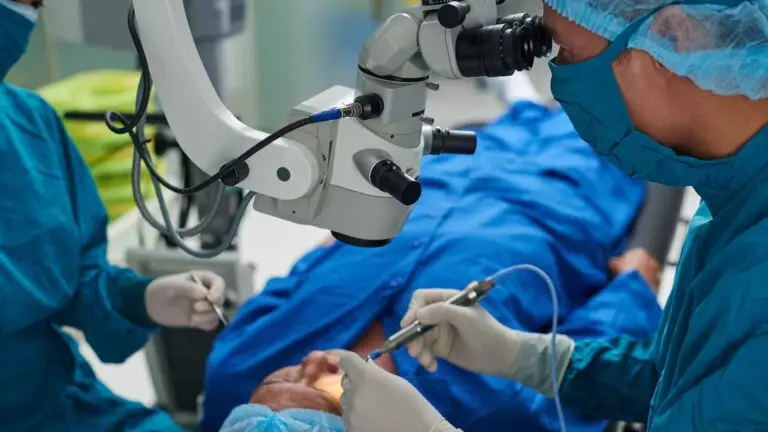
Cataract surgery removes your eye’s clouded natural lens and replaces it with a premium artificial intraocular lens (IOL). Performed under local anaesthesia, the quick 20-minute micro‑incision procedure restores clear vision and often reduces glasses dependence. The procedure is one of the UK’s safest and most effective elective operations.
Am I a Candidate for Cataract Surgery at Blue Fin Vision®?
If cataracts impair daily tasks like driving, reading or independence, you likely qualify. Symptoms such as glare, foggy vision, difficulty reading small print, or frequent prescription changes indicate suitability. Most people over 60 with symptomatic cataracts are good candidates. Younger patients with active lifestyles may benefit earlier. Complete our free self‑assessment tool or book a consultation for personalised advice based on advanced imaging of your eyes.
How Long Are NHS Waiting Times for Cataract Surgery?
NHS waits average 6–18 months nationally, with consultations often 4–12 weeks post‑referral and surgery 3–12+ months after that. High-demand areas report even longer delays. Private care at Blue Fin Vision® schedules consultations within 1–2 weeks and surgery within 2–6 weeks of enquiry. This means you could regain clear vision within 4–8 weeks – compared to potentially 18+ months on NHS waiting lists. (Subject to clinical assessment and surgeon availability).
How Much Does Cataract Surgery Cost?
We believe in transparent cataract surgery pricing tailored to your specific needs, including premium ZEISS IOLs, all post-operative drops and structured follow-ups. Monofocal lenses are the base option; premium trifocal and EDOF lenses add cost for enhanced glasses independence and quality-of-life benefits. Consultation fees are clearly stated upfront. Finance options are available to make premium care accessible. For full pricing details and to discuss your investment in restored vision, visit our costs page or contact us directly.
Is Cataract Surgery Painful?
No – local anaesthetic drops and optional sedation ensure complete comfort throughout the procedure. Patients describe a mild pressure sensation at most, with no pain during the quick operation. You remain awake and aware but completely comfortable, and the entire process is stress-free.
How Long Does Cataract Surgery Take?
Active surgery lasts 5–10 minutes per eye. Total theatre time is typically 30–45 minutes, with same‑day discharge. Immediate Sequential Bilateral Cataract Surgery (ISBCS) treats both eyes consecutively in one session, allowing you to go home with both eyes treated and halving overall recovery time.
What are the Risks Associated with Cataract Surgery?
Cataract surgery is very safe – one of the UK’s safest elective procedures. Modern techniques and advanced diagnostics minimise risks significantly. Temporary side effects like dryness, grittiness or mild glare are common and typically resolve within weeks. Rare complications such as infection (~1:1000) are managed promptly with expert treatment. Our detailed risks page explains all potential complications, warning signs, and how Blue Fin Vision® minimises surgical risk through rigorous protocols and consultant-led care.
Will I Still Need Glasses After Cataract Surgery?
This depends on your lens choice:
Monofocals: Excel at distance vision but require reading glasses for near tasks. Many patients are happy with this straightforward option.
Trifocals and EDOF: Minimise glasses dependence for most daily tasks – reading, computers, driving. Many of our patients enjoy greatly reduced reliance on glasses post-surgery.
Our premium lens options further enhance the potential for glasses-free vision, though some patients still prefer reading glasses for extended fine detail work. During your consultation, we discuss realistic expectations based on your chosen lens type and lifestyle.
How Soon After Cataract Surgery Will I See Improvement?
Many patients notice significantly clearer vision same day; substantial improvements within 24–48 hours. Full stabilisation and best vision occur over 2–4 weeks as the eye fully heals. Drops and structured follow-ups optimise healing and ensure the best possible outcome.
What Makes Blue Fin Vision® Different?
Consultant-led care from initial assessment through aftercare – your named surgeon performs all stages of your journey. We use premium ZEISS technology renowned worldwide, offer luxury recovery (private en-suite rooms, three-course meals for you and your companion, celebratory champagne), provide rapid access (4–8 weeks from enquiry to surgery), achieve NOD-audited outcomes and hold recognition from prestigious guides including Spear’s and Tatler. Our team prioritises your safety, vision and experience at every stage.
When Can I Drive After Cataract Surgery?
Typically, 1–2 days after your first eye, once your surgeon confirms good vision at your initial check-up (reading number plate at 20 metres). For bilateral ISBCS, both eyes heal similarly, though your surgeon confirms safe driving timing at your post-operative review. Avoid driving if glare persists or vision feels unsafe.
What Drops Are Used and for How Long?
Antibiotic drops prevent infection (1 week post-surgery), and steroid/anti‑inflammatory drops reduce swelling (4 weeks post-surgery). All drops are provided at no extra cost. Simple instructions explain how to shake bottles; space drops 5 minutes apart and use them correctly. Complete written guidance is provided, and our team is always available if you have questions about your drops.
Can Both Eyes Be Done Together (ISBCS)?
Yes, for suitable patients – Immediate Sequential Bilateral Cataract Surgery treats both eyes in one session, significantly reducing overall recovery time and minimising life disruption. Strict protocols using separate instruments and rigorous separation ensure safety equivalent to separate procedures on different days. Your surgeon assesses individual suitability based on eye health, age and lifestyle factors.
What Lens Options Are Available?
Monofocal Lenses: Optimise distance vision; ideal for those content with reading glasses for near work. Cost-effective, reliable and suitable for most eyes.
Trifocal Lenses (ZEISS AT LISA tri): Deliver clear vision at near, intermediate and distance – offering maximum glasses independence for active lifestyles. Trusted by leading surgeons worldwide, including those who’ve chosen them for their own eyes.
Extended Depth of Focus (EDOF) Lenses: Provide smooth vision progression from distance through intermediate with fewer night-time disturbances than trifocals; ideal for outdoor enthusiasts and those valuing balance.
All lenses are available in toric designs for astigmatism correction. Your consultant matches the optimal lens to your lifestyle, work and visual priorities.
What if I Have Fuchs' Corneal Dystrophy, Glaucoma or Other Conditions?
These conditions don’t rule out cataract surgery – they simply require tailored surgical planning.
Fuchs’ Endothelial Dystrophy: Advanced corneal imaging guides safe surgery with endothelial protection techniques. Patients may require closer post-operative monitoring for corneal swelling, but surgery is often appropriate and beneficial.
Glaucoma or High Eye Pressure: We monitor eye pressure carefully throughout your care and select lenses designed to minimise pressure fluctuations. Coordination with your glaucoma specialist ensures optimal management.
Macular Degeneration or Diabetic Retinopathy: Pre-operative scans assess whether the macula is healthy enough to benefit from cataract removal. Surgery can improve visual function and contrast if the macula is adequately healthy.
Previous Corneal Surgery (LASIK, PRK): Specialist biometry techniques ensure accurate lens power calculation for optimal outcomes.
Complex cases are welcome – our consultant-led approach tailors’ surgery to your individual needs and eye health.
How Safe is Cataract Surgery?
Cataract surgery is extremely safe – one of the most successful elective procedures performed in the UK. Success rates exceed 95%, with the vast majority of patients achieving excellent vision improvement. Modern surgical techniques, advanced diagnostics and consultant-led care at Blue Fin Vision® minimise risks significantly. Serious complications are rare; temporary side effects like dryness are common but manageable with prescribed drops and time.
Is Cataract Surgery Suitable for Older Patients?
Yes, absolutely. Age alone is not a barrier to safe cataract surgery. Many patients in their 80s and 90s benefit greatly from the procedure. What matters more is your overall general health and eye health rather than your age. During your consultation, we assess your individual suitability based on comprehensive imaging and your health status.
What if My Vision Doesn't Reach the Target Prescription?
In a small percentage of cases (~5%), the final prescription may not achieve the intended target. If a residual refractive error of 1 dioptre or more remains, enhancement options are available:
- Laser eye surgery: A precise, customised LASIK procedure to correct residual error
- Piggyback lens: An additional lens implanted to fine-tune vision without removing the original lens
Our experienced team guides you through the most suitable enhancement option based on your individual needs.
What's Involved in the Pre-operative Consultation?
Your comprehensive consultation includes:
- Symptom and lifestyle review: Understand how cataracts affect your daily activities
- Advanced imaging: Pentacam corneal topography, OCT retinal scans and dual biometry for precise measurements
- Detailed eye examination: Assessment of vision, eye pressure, cataract severity and retinal health
- Discussion of IOL options: Review monofocal, trifocal and EDOF lenses with honest pros and cons
- Risk and benefit discussion: Open conversation about success rates, complications and recovery expectations
- Personalised recommendation: Based on your eye health and lifestyle, we recommend the optimal lens type
- Informed consent: Ensure you fully understand your chosen procedure and expected outcomes
How Quickly Can I Return to Normal Activities?
Timeline varies individually, but generally:
- Driving: 1–2 days post-surgery (once surgeon confirms good vision)
- Light work/reading: Day 1–3
- Desk work/screens: Week 1–2
- Exercise/walking: Day 2+
- Swimming/gym/heavy lifting: 4–6 weeks
- All normal activities: 6–8 weeks post-surgery
Your surgeon confirms activity clearance at follow-ups based on your individual healing.
Will Cataract Surgery Prevent Future Cataracts?
Yes and no. Because your natural lens is replaced with an artificial IOL, you cannot develop a cataract in that lens. However, if cataracts develop in the other untreated eye, that eye may need future surgery. This is why many patients opt for bilateral ISBCS – treating both eyes in one session eliminates this concern entirely.
What Happens if I Have Questions After Surgery?
Our team remains accessible throughout your recovery. You receive clear written instructions, emergency contact details, and can reach us with any concerns. Early review of even minor symptoms allows most issues to be addressed promptly, protecting your vision and supporting optimal recovery. Your safety and satisfaction are our absolute priority.
How is Blue Fin Vision® Different from Other Private Eye Clinics?
Several factors distinguish our care:
- Consultant-led continuity: Your named surgeon performs assessment, surgery and aftercare, not different staff at each stage
- Premium ZEISS optics: We exclusively use ZEISS technology trusted by leading surgeons worldwide
- Luxury recovery: Private en-suite rooms, three-course meals and champagne for every patient
- Rapid access: Surgery often within 4–8 weeks of enquiry, not months
- Audited outcomes: NOD-verified results ensuring transparent success rates
- Recognised excellence: Endorsed by Spear’s, Tatler and other prestigious guides
- Multiple convenient locations: London, Chelmsford and Hatfield for easy access
We combine Harley Street standards with accessibility and genuine care for each patient’s journey.
What Payment Options Are Available?
We offer transparent, upfront pricing with several payment options:
- Direct payment: Clear pricing with no hidden fees
- Finance plans: Flexible payment arrangements to make premium care accessible
- Consultation fees: Clearly stated upfront; can be deducted from surgery costs
Discuss payment options during your consultation – we’re committed to making world-class vision care financially manageable.