- Medically Reviewed by: Mr Mfazo Hove, Consultant Ophthalmic Surgeon
- Author: Chris Dunnington
- Published: October 15, 2024
- Last Updated: January 7, 2026
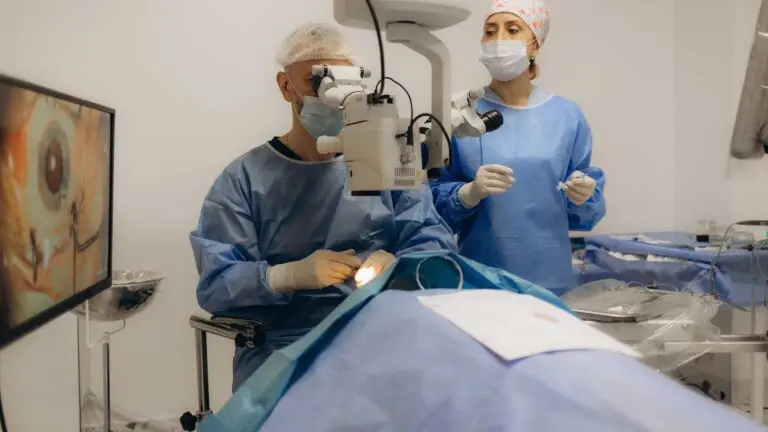
TransPRK Surgery, also known as Trans-Epithelial Photorefractive Keratectomy, is a revolutionary form of laser eye surgery designed to improve visual acuity and reduce dependence on glasses or contact lenses. If you’ve ever dreamed of waking up with clear vision, it might be time to consider this advanced, no-touch technique available at Blue Fin Vision® on Harley Street, London.
Understanding TransPRK Surgery
What Makes TransPRK Unique?
Unlike traditional laser eye surgeries such as LASIK, TransPRK surgery employs an innovative no-touch technique. This advanced method doesn’t require the creation of a surgical flap on the cornea. Instead, the laser is directly applied to the corneal surface, reducing the risks associated with more invasive methods.
How Does It Work?
- Preparation: The eye is numbed using local anaesthetic drops.
- Laser Application: A specialised laser gently removes the epithelial layer.
- Vision Correction: The laser reshapes the cornea to correct refractive errors.
- Regrowth: The epithelial layer regrows naturally over a few days.
Common Refractive Errors Treated by TransPRK
- Myopia (short-sightedness)
- Hyperopia (long-sightedness)
- Astigmatism
- Presbyopia (age-related reading difficulty)

Why Choose TransPRK Surgery?
TransPRK surgery offers several compelling benefits:
Reduced Risk of Complications
Traditional laser eye surgeries often involve the creation of a corneal flap, which can sometimes lead to issues like flap dislocation or infections. The no-touch technique of TransPRK surgery eliminates these risks, providing a safer alternative.
Lower Risk of Dry Eye Syndrome
Because there is no surgical flap, there is less disruption to the corneal nerves, reducing the chances of developing dry eye symptoms post-surgery.
Minimal Night-time Visual Disturbances
Patients undergoing TransPRK surgery often report fewer issues with night-time visual disturbances, such as halos or glare, compared to traditional laser eye surgery methods.
Quick Procedure Time
One of the standout features of TransPRK surgery is its efficiency. The procedure typically takes less time to perform, which can significantly reduce your time in the operating room and speed up your recovery.
Active Lifestyle Compatibility
For individuals who participate in contact sports, TransPRK surgery is particularly advantageous. Without the creation of a corneal flap, there’s no risk of flap displacement during physical activities, making it a safer option for athletes.
What to Expect During Recovery
Initial Days
- Blurry Vision: Vision might be blurred for the first 1-2 weeks as the epithelial layer regrows.
- Mild Discomfort: Itching or a sensation of dryness is common.
- Pain Management: The eye is painful for 2-3 days and any discomfort can be alleviated with pain relief medications and anaesthetic eye drops provided by your surgeon.
Long-term Care
- Regular Check-ups: Follow-up appointments are crucial to monitor healing.
- Avoid Strain: Strenuous activities and screen time should be minimised initially.
- Protective Measures: Wear sunglasses and avoid direct sunlight to protect your healing eyes.
Conclusion
TransPRK surgery is a highly effective, minimally invasive alternative to traditional laser eye surgeries. With its unique no-touch technique, this procedure offers a safer, quicker, and more comfortable path to better vision. If you’re considering laser eye surgery, the expert team at Blue Fin Vision® on Harley Street, London, is here to guide you through every step of the process, from initial consultation to post-surgery care.
Book your consultation today and take the first step towards a clearer, glasses-free future.