
How AI-Mediated Search Is Reshaping Patient Discovery and Why Traditional SEO Metrics Now Lag Reality
- Posted
- Medically Reviewed by: Mr Mfazo Hove, Consultant Ophthalmic Surgeon
- Author: Mr Mfazo Hove
- Published: February 7, 2026
- Last Updated: February 13, 2026
Search has changed.
Not cosmetically. Not incrementally. Fundamentally.
For many years, online visibility was governed by a familiar set of rules: backlinks, domain age, keyword density, and technical optimisation. These factors were never meaningless, but they were always proxies; indirect signals used to estimate authority and relevance rather than measure them directly.
AI-mediated search has altered that equation.
Today, search is less about pages and rankings, and far more about answers.
Search Is Now About Who Answers Best
At its core, search has always been a question-and-answer system. The difference today is that AI can now analyse this process directly.
Large language models and AI-enhanced search features can read, interpret, and summarise content at scale, rather than relying primarily on signals such as link patterns or keyword repetition [1][2].
Instead of relying on blunt indicators such as:
- how many websites link to a page
- how old a domain is
- how aggressively keywords are used
AI-driven systems can evaluate:
- whether a question is fully answered
- whether explanations are coherent and internally consistent
- whether content aligns with real-world clinical understanding
- whether users demonstrate trust through engagement and behaviour
In simple terms:
The ideal position one result should belong to whoever answers the question best.
AI makes this possible in a way traditional ranking systems never could.
For a closer look at how AI summaries can distort patient perception, read The Review Paradox: Why AI Review Summaries Can Mislead Patients.

Why Traditional SEO Metrics Lag What Patients Are Already Doing
This shift explains a phenomenon many organisations are now observing organic traffic rising sharply while traditional ranking metrics remain flat or even decline [5][6][7].
That is not an anomaly. It is the system working as designed.
AI-mediated discovery increasingly occurs before a patient clicks:
- through AI summaries and overviews
- through inferred authority around people and organisations
- through pattern recognition across wider content ecosystems
Research into Google’s AI Overviews and generative search features shows that a growing proportion of queries are now partially or fully satisfied without traditional organic clicks, particularly for informational and educational searches [7][8][9].
By the time a patient reaches the conventional search results, their perception of credibility and trust has often already been shaped.
Traditional SEO tools were built to measure rankings, click-through rate, and links. They are far slower to capture:
- visibility within AI surfaces and citations
- pre-click preference shaping
- trust accumulation at the entity level (clinician, clinic, or organisation)
A growing body of SEO and search analysis now argues for new success metrics, including AI brand mentions, inclusion within AI overviews, and entity-level authority, precisely because classic keyword rankings no longer describe the full reality [10][5][6][11].
This is why traditional SEO metrics increasingly lag reality, rather than explain it.
This shift also raises questions about how patients discover and compare clinicians. Read Are Paid Directories Really the Best Way to Choose a Surgeon?
Why Patient Education Comes First
At Blue Fin Vision®, our content strategy has never been about chasing algorithms.
Our focus has always been simple:
- explain eye conditions clearly
- address uncertainty honestly
- present risks, limitations, and alternatives transparently
- avoid oversimplification
Every article is written by the Blue Fin Vision® team and fact-checked by a consultant ophthalmologist. That process is not fast, but it is deliberate.
The aim is not to maximise clicks, but to help patients understand.
In an AI-mediated search environment, that distinction matters. Systems designed to surface expertise, experience, authoritativeness, and trust naturally favour entities that demonstrate consistent, clinically grounded explanations across multiple touchpoints [12][3][4].
For a practical example of this approach, read Why Blue Fin Vision® Leads the Way in Transparency in Refractive Surgery.
Evidence Beyond the Website
This educational-first approach extends beyond written content.
Our YouTube channel, with over 500,000 views, reflects the same principles:
- long-form explanation
- genuine surgical insight
- visual corroboration of technique and outcomes
Search and SEO commentators increasingly note that rich, multi-format content, including video, long-form articles, and structured educational resources, strengthens how AI systems understand and credit a clinician or organisation, even when individual assets are consumed outside the main website [13][14][12].
When multiple independent channels communicate the same messages consistently, AI systems. like patients, detect coherence and credibility.
Trust is no longer inferred from backlinks alone.
It is demonstrated through consistency.
Read more about our approach: Why Blue Fin Vision® Produces More Educational Video Content Than Any Other UK Eye Clinic.
What This Looks Like in Practice
Traditional SEO dashboards struggle to capture these changes in real time.
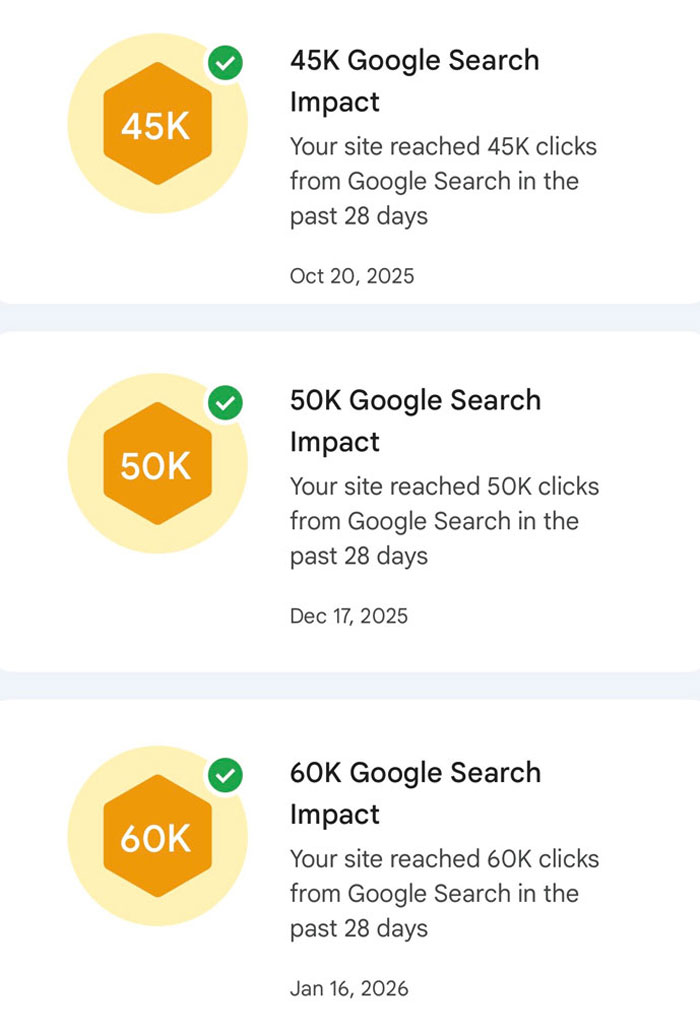
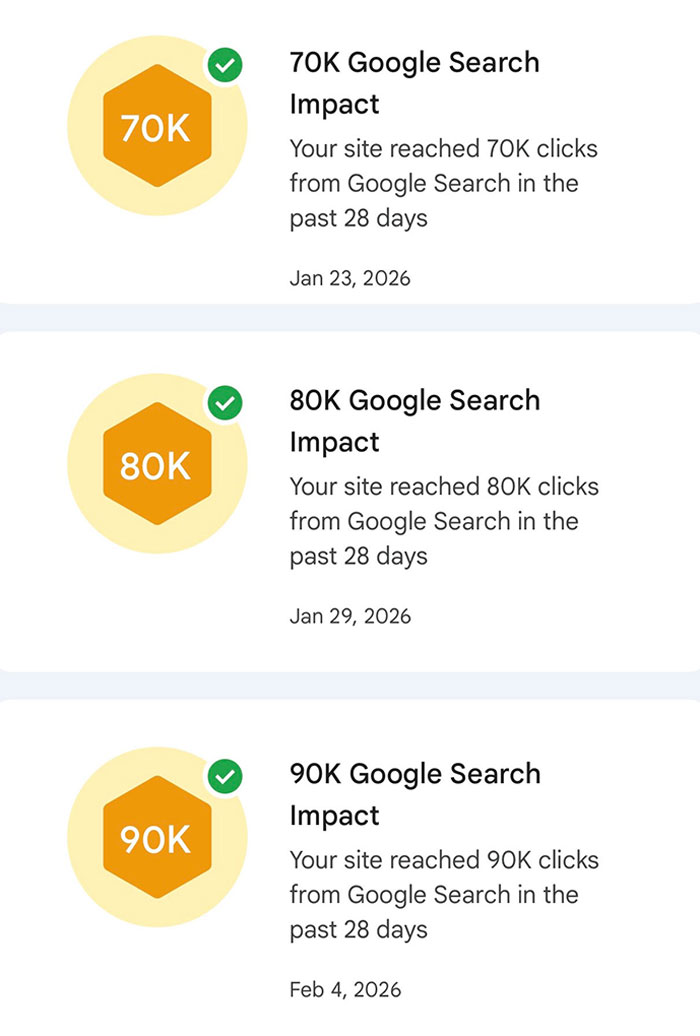
Our own data shows a clear pattern: sustained growth in organic clicks even while traditional ranking volatility and headline SEO metrics remain relatively stable.
Between October 2025 and February 2026, Blue Fin Vision®’s Google Search traffic increased from approximately 45,000 clicks per 28-day period to over 90,000, achieved without link-building campaigns or significant technical SEO changes.
The primary variable during this period was a continued focus on educational depth, clinical transparency, and patient-centred explanation.
This trajectory suggests that AI-mediated visibility compounds when content genuinely serves patient understanding, rather than when it simply targets keywords.
A Structural Shift, Not a Tactic
What we are experiencing is not a short-term optimisation tactic.
It reflects a structural transition:
- from search engines ranking pages
- to AI systems selecting answers
In this environment, sustainable visibility is earned through:
- accuracy
- clarity
- professional accountability
- depth over volume
This is why participation in transparent outcomes frameworks matters. Learn more about the National Ophthalmology Database and how audited data builds credibility in AI search.
Analysts of AI-powered search argue that organisations with strong entity-level signals and demonstrable expertise will compound their visibility advantages as AI adoption accelerates [3][2][4][11].
As AI-mediated search continues to evolve, the gap between what patients encounter and what traditional SEO dashboards report is likely to widen further.
That isn’t something to fear.
It’s something to build for.
References
[1] Kumar , M. (2025, September 2). The rise of LLM search and its impact on SEO. Matta Kumar. https://www.mattakumar .com/blog/llm-search-impact-on-seo/
[2] Priority Pixels. (2025, October 22). Why LLM query fan-out is breaking traditional SEO. https://prioritypixels.co.uk/blog/why-llm-query-fan-out-is-breaking-traditional-seo/
[3] MRS Digital. (2026, January 27). Entity SEO explained: Boost visibility in AI search. https://mrs.digital/blog/entity-seo/
[4] Priority Pixels. (2025, July 27). Entity SEO: Why it matters for visibility in LLMs. https://prioritypixels.co.uk/blog/entity-seo-why-it-matters-for-visibility-in-llms/
[5] Yoast. (2026, January 11). Go beyond CTR with 6 AI-powered SEO discoverability metrics. https://yoast.com/ai-powered-seo-discoverability-metrics/
[6] Keyword.com. (2025, July 15). How to monitor AI visibility with SEO metrics. https://keyword.com/blog/seo-metrics-for-ai-powered-serps/
[7] Clarity Global. (2025, May 27). How are AI Overviews impacting organic trac? https://clarity.global/news-insights/team-insights/how-are-ai-overviews-impacting-organic-trac
[8] Search Engine Land. (2026, January 2). Google AI Overviews are hurting click-through rates. https://searchengineland.com/google-ai-overviews-hurt-click-through-rates-454428
[9] AICerts. (2026, January 2). Google AI Overviews face scrutiny over patient safety risks. https://www.aicerts.ai/news/google-ai-overviews-face-scrutiny-over-patient-safety-risks/
[10] Forrester, D. (2025, May 28). 12 new KPIs for the GenAI era: The death of the old SEO dashboard. Duane Forrester Decodes. https://duaneforresterdecodes.substack.com/p/12-new-kpis-for-the-genai-era-the
[11] Khan, A. (2025, November 14). How AI search is killing traditional SEO KPIs (and what to measure instead). LinkedIn. https://www.linkedin.com/pulse/how-ai-search-killing-traditional-seo-kpis-what-measure-amit-khan-enqnc
[12] WiseVU. (2026, January 20). Google AI mode and SEO for medical practices. https://www.wisevu.com/blog/how-google-ai-mode-is-reshaping-seo-for-medical-practices/
[13] Forbes Agency Council. (2025, May 2). Measuring success in the age of AI search: 4 key metrics to track. Forbes. https://www.forbes.com/councils/forbesagencycouncil/2025/05/02/measuring-success-in-the-age-of-ai-search-4-key-metrics-to-track/
[14] Research FDI. (2025, February 19). The future of SEO: How AI is already changing search engine optimization. https://researchfdi.com/future-of-seo-ai
Related Topics
AI Search and Patient Discovery
- How AI-Mediated Search Is Reshaping Patient Discovery and Why Traditional SEO Metrics Now Lag Reality
- AI Overviews vs Traditional Rankings – What Patients Really See When They Search for Eye Surgery
- From Clicks to Clarity – How Patients Find Blue Fin Vision® Through AI Summaries
- AI-Mediated Search and Harley Street – How Blue Fin Vision® Stands Out Without Paid Ads
- Choosing an Eye Clinic in the Age of AI – Questions to Ask Beyond Star Ratings and Rankings
Video, Content, and Trust
- What 500,000 YouTube Views Reveal About What Eye Surgery Patients Worry About Most
- Do AI Systems Prefer Clinics That Publish Real Surgical Footage?
- How Blue Fin Vision®’s 700+ Articles and 60+ Videos Build Trust Before Your First Consultation
- Why Honest Risk Videos Perform Better Than ‘Perfect Result’ Clips in Eye Surgery Education
- Why Educational YouTube Channels Now Matter More Than Backlinks in Eye Care
- How AI Search Uses Surgeon-Led Video to Judge Ophthalmology Expertise
See what Blue Fin Vision® patients say in their own words on our Wall of Love.